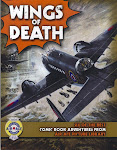
The Summer issue of Spaceship Away contains two fine articles to accompany its usual compliment of comics strips. I must admit that these were the first things I dived into when the issue arrived. First up was 'The Bruce Cornwell Story', based on Cornwell's own words from previously unpublished recordings arranged by Bruce's son, Anthony. The details of Bruce's wartime experiences are fascinating, as are his memories of working in the comics industry.
A second article explores the forgotten-by-most early work of Dave Gibbons in the pages of Hotspur and Wizard. In 1974, Dave's first professional appearance in the 'Big Two'—outside of lettering and ghosting—made its debut in Wizard in the shape of 'The Wriggling Wrecker', an alien fungus that threatens catastophe when it begins to spread. He continued to work for Thomsons for a few years, drawing 'Year of the Shark Men', 'The Spy in the Sputnik' and the popular adventures of crimefighter 'Spring Heeled Jackson' amongst others.
Tim Booth provides the regular Dan Dare content of the magazine, two stories each of four pages. He is perhaps Spaceship Away!'s finest discovery as he maintains the feel of the original strip without losing the energy that a page of artwork needs to draw in the eye. The only shame is that there's always a four month gap between episodes and the story 'Parsicular Tales', which has now reached episode 19, has now been running for five years.
This latest issue also continues the adventures of Jet Morgan and Nick Hazard and has a centre-spread by Gerry Embleton and a front and rear cover by Don Harley.
This issue has a bonus A5 booklet containing the 20-page first chapter of Operation Tau Ceti by Denis Steeper, who has written a number of other Dan Dare stories in the past. This one tells the tale of Spacefleet's first interstellar expedition.
You can find out more about the magazine, buy back issues and subscribe to the latest issues at the Spaceship Away website.
Saturday, July 18, 2015
Friday, July 17, 2015
Comic Cuts - 17 July 2015
On Monday I hopped back on the Hotel Business treadmill to catch up on e-mails that had built up last week. About 650 of them. After lining up a number of stories on the paper's website on Monday morning, I cracked on with the mail and wiped out around 200 before the day's end. Lots of them are irrelevant—news from abroad, news that's going to be way out of date by the time the next issue appears in mid-August, or just plain bugger all to do with us.
Despite new mail arriving at a rate of 50-80 press-releases a day, on Tuesday I managed to get the mail levels down to around 120 by close of play. Wednesday was a nice change of pace: I'd built up a few stories supplied by our ad department and spent a good part of the day chopping them down to a reasonable and readable few paragraphs. By day's end I'd also cracked on with the mail and had kept it down to about 130 unread.
And that brings us up to date as I'm writing this on Thursday afternoon, having spent this morning working on the last bit of the current crop of Caught In The Act research, which I'll post either over the weekend or during next week. It concerns another court case and is the last of this first batch of research notes for the book; we've now covered all the cases from that period (1938-42) that resulted in jail sentences of over 18 months.
There may now be a little pause while I get into the next bit of research: the distribution of US pulps and magazines in the UK.
When I'm not in front of the computer, I've been keeping tabs on our latest crop of tomatoes. We have three plants this year, all of which are blooming. In fact, we've started picking this year's crop, having plucked three black cherry tomatoes from the plant yesterday. Not only that, but we've also had one huge cucumber—gorgeously crisp and perfect in a sandwich with some nice strong cheese we had sitting in the fridge.
Judging by the clusters of flowers on these plants we can expect plenty more tomatoes, cucumbers and beans—I'm especially looking forward to the first of the Marmande tomatoes, which are weirdly segmented. One of them looks almost ready for picking.
Today's random scans are a trio of saucy novels from the 1930s, in keeping with the research I've been doing for the book. Gramol published over 100 of these novels in 1928-30 but they're so scarce these days that I've never been able to compile a complete catalogue of the authors—I think I'm ten shy at the moment, so if anyone has any of these, perhaps they'll know the names of the authors of Sweet Surrender, It Happened In Paris, The Easiest Way, A Daughter of Joy, Passion Seekers, Satan's Temptress, Prairie Passion, Professional Love, The Call of Youth and The Garden of Passion.
If anyone has any of these old Gramol titles of any description [crime, romance, westerns, etc.] I'd love some scans; even a decent photograph might be of use as it's an area I'm poor in when it comes to copies and cover scans. Unbelievable to think that Gramol published over 660 books, of which I have maybe half a dozen!
Despite new mail arriving at a rate of 50-80 press-releases a day, on Tuesday I managed to get the mail levels down to around 120 by close of play. Wednesday was a nice change of pace: I'd built up a few stories supplied by our ad department and spent a good part of the day chopping them down to a reasonable and readable few paragraphs. By day's end I'd also cracked on with the mail and had kept it down to about 130 unread.
And that brings us up to date as I'm writing this on Thursday afternoon, having spent this morning working on the last bit of the current crop of Caught In The Act research, which I'll post either over the weekend or during next week. It concerns another court case and is the last of this first batch of research notes for the book; we've now covered all the cases from that period (1938-42) that resulted in jail sentences of over 18 months.
There may now be a little pause while I get into the next bit of research: the distribution of US pulps and magazines in the UK.
When I'm not in front of the computer, I've been keeping tabs on our latest crop of tomatoes. We have three plants this year, all of which are blooming. In fact, we've started picking this year's crop, having plucked three black cherry tomatoes from the plant yesterday. Not only that, but we've also had one huge cucumber—gorgeously crisp and perfect in a sandwich with some nice strong cheese we had sitting in the fridge.
Judging by the clusters of flowers on these plants we can expect plenty more tomatoes, cucumbers and beans—I'm especially looking forward to the first of the Marmande tomatoes, which are weirdly segmented. One of them looks almost ready for picking.
Today's random scans are a trio of saucy novels from the 1930s, in keeping with the research I've been doing for the book. Gramol published over 100 of these novels in 1928-30 but they're so scarce these days that I've never been able to compile a complete catalogue of the authors—I think I'm ten shy at the moment, so if anyone has any of these, perhaps they'll know the names of the authors of Sweet Surrender, It Happened In Paris, The Easiest Way, A Daughter of Joy, Passion Seekers, Satan's Temptress, Prairie Passion, Professional Love, The Call of Youth and The Garden of Passion.
If anyone has any of these old Gramol titles of any description [crime, romance, westerns, etc.] I'd love some scans; even a decent photograph might be of use as it's an area I'm poor in when it comes to copies and cover scans. Unbelievable to think that Gramol published over 660 books, of which I have maybe half a dozen!
Labels:
Comics News
Thursday, July 16, 2015
Commando issues 4827-4830
Commando issues on sale 16th July 2015.
Commando No 4827 - Know Your Enemy
In the Summer of 1940, rumours abounded that German forces were poised to invade Great Britain…
Brigadier Harry Thomas of the Intelligence Corps believed in hard facts and those came from proper intelligence, reported by seasoned professionals.
Aerial reconnaissance photos, for example, were valuable, of course, but they were no match for a couple of his finest operatives who were in the thick of the action. But would Captain Frank Draper and Sergeant Ollie Wentworth live long enough to deliver their vital reports?
Introduction
Intelligence. The word conjures up a mental picture of fast cars, snappy dressing and the latest gadgets. The reality is somewhat different and military intelligence, far from being a contradiction in terms, can trace its roots to biblical times when Moses was told “go spy the land” (Numbers 13:17).
Prior to the Boer War the British Army tended to form ad hoc intelligence organisations during campaigns in order to provide the commander with the necessary information and intelligence to defeat our enemies. After each campaign the military intelligence organisations were disbanded.
Steps were taken to raise an Intelligence Corps on the outbreak of the First World War. Following the expiry of the British ultimatum to the Germans on 5th August 1914 some fifty or so individuals received a telegram inviting them to join the newly formed Intelligence Corps.
Former metropolitan Police Officers operated, as field security police, to great effort behind our own lines identifying enemy agents, capturing mutineers and protecting the Royal Family. Despite the good work by members of the Corps, by 1929 the whole of the Intelligence Corps was disbanded.
On the outbreak of war on 04 September 1939 the British Expeditionary Force deployed to France with 31 Field Security Police Sections and upon this small foundation the Corps eventually grew to 3040 officers and 5930 other ranks. The Corps was formally constituted with the consent of King George VI on 15 July 1940, with the formation being notified on 19 July 1940 in Army Order 112.
Post war the threat was from Communism and the Corps has played a major role in the games of counterespionage, intelligence and counter-intelligence that characterised the Cold War in Europe and Asia in the latter half of the twentieth century.
Since the Second World War, the Corps has deployed with the British Amy all over the world and in recognition of its meritorious service the Corps was declared an ‘Arm’ on 01 February 1985. An ‘Arm’ is defined as those Corps whose role is to be close in combat with the enemy.
The Intelligence Corps, to fans and detractors alike is known as the Green Slime due to the distinctive colour of its beret. It has always attracted unique soldiers in terms of temperament, character and demeanour; in the Intelligence Corps today you are likely to meet soldiers with advanced degrees.
Manui dat cognitio vires
Story: Alan Hebden
Art: Vila
Cover: Stephen White
Commando No 4828 - One False Move…
“Unexploded bomb!” That dreaded cry would send shivers down the spine of the bravest man. Yet, for Lieutenant Bill Seddon of the Bomb Disposal Company, it was all in the line of duty. Every day he faced the task of defusing these devilish devices with the same outward coolness.
But now the strain was beginning to show. Bill’s hands were trembling as he lifted the fuse mechanism from the dull-grey 250kg bomb which lay before him. His nerves had been stretched to their limit, and death now stared him in the face. All it would take was…
Introduction
Colonel Mike Brooke OBE, former Commanding Officer 33 Engineer Regiment (Explosive Ordnance Disposal)
2015 is a special year for Royal Engineers Bomb Disposal as it is exactly 75 years since the original Bomb Disposal Teams were formed in 1940 in response to a terrible threat facing the United Kingdom from Nazi Germany. There are commemorations in the Bomb Disposal Regiments culminating in a Service of Thanksgiving at St Paul’s Cathedral in October. St Paul’s Cathedral has a special place in our hearts since it could well have been destroyed by a German aerial delivered bomb which penetrated 30 feet into the road just outside the Cathedral but failed to detonate. Lieutenant Robert Davies RE and his team were immediately deployed to tackle it. At huge risk to themselves, the bomb was made safe and removed by Lance Corporal George Wylie. Their incredible bravery in the face of certain death earned them each the George Cross, Britain’s highest award for gallantry not in the face of the enemy! It’s hard to imagine that the average life expectancy of Bomb Disposal Officers and their Number 2s was just 7-9 weeks in Central London at the height of the Blitz! The Nation owes them a lot…and you can read about their heroism inside this graphic Commando comic.
But the story of Royal Engineers Bomb Disposal doesn’t stop at World War II. Each year since 1945, Explosive Ordnance Teams have been busy dealing with every type of bomb, shell or missile wherever the threat to military and/or civilian personnel occurred. In the aftermath of the 1st Gulf War in 1991, some 5 million items were safely dealt with once Sadam Hussein had been booted out of Kuwait…equally, ex-members of the 33/101 Engineer Regiments (EOD) have been employed in lots of civilian explosive ordnance disposal companies helping to make safe civilian populations all over the world, particularly in Africa and the Far East in places like Vietnam.
So, as you dip into this comic, which I thoroughly recommend, please remember the ‘unsung heroes’ of Royal Engineer Bomb/Explosive Ordnance Disposal Units, some of whom paid the ultimate price to make our world a safer place.
Story: Bernard Gregg
Art: Carrion
Cover: Ian Kennedy
Originally Commando 1329 (Jun 1979).
Commando 4829 - Operation Double Bluff
After seeing his fellow Paratroop squad soldiers brutally killed by Germans in enemy-occupied Holland – and being shot himself and left to die – Lieutenant Ralph Loach was a man determined to settle the score.
Newly transferred to war-battered Berlin with the Intelligence Corps, could Ralph put aside his quest for revenge long enough to let him help his new colleagues find the sadistic S.S. officer responsible?
Introduction
(see 4827)
Story: George Low
Art: Vicente Alcazar
Cover: Janek Matysiak
Commando No 4830 - Appointment In Cairo
Cairo — Egypt’s capital city and British General Headquarters in the Middle East, nerve centre of the Allied campaign in North Africa. A city filled with soldiers, sailors, airmen…but also a city teeming with spies and agents, men who would stop at nothing to get the information they needed…then send back to their own headquarters — Berlin!
Introduction
Have your holidays ever not quite turned out as planned? And I’m not talking about a missing suitcase or the Duty Free shop in the airport being closed…
Our hero, Lieutenant Dick Maltby of the Special Investigative Branch — the Army’s criminal investigative wing — is enjoying some hard-earned leave in the bustling Egyptian capital when he is thrust into a deadly fight for his life against a shadowy spy ring. Well, it happens.
This is a thrilling Commando tale packed with action, intrigue and espionage and…I reckon it makes for some great summer holiday reading!—Scott Montgomery, Deputy Editor
Story: R.A. Montague
Art: Ibanez
Cover: Ian Kennedy
Originally Commando 1025 (Apr 1976).
Commando No 4827 - Know Your Enemy
In the Summer of 1940, rumours abounded that German forces were poised to invade Great Britain…
Brigadier Harry Thomas of the Intelligence Corps believed in hard facts and those came from proper intelligence, reported by seasoned professionals.
Aerial reconnaissance photos, for example, were valuable, of course, but they were no match for a couple of his finest operatives who were in the thick of the action. But would Captain Frank Draper and Sergeant Ollie Wentworth live long enough to deliver their vital reports?
Introduction
Intelligence. The word conjures up a mental picture of fast cars, snappy dressing and the latest gadgets. The reality is somewhat different and military intelligence, far from being a contradiction in terms, can trace its roots to biblical times when Moses was told “go spy the land” (Numbers 13:17).
Prior to the Boer War the British Army tended to form ad hoc intelligence organisations during campaigns in order to provide the commander with the necessary information and intelligence to defeat our enemies. After each campaign the military intelligence organisations were disbanded.
Steps were taken to raise an Intelligence Corps on the outbreak of the First World War. Following the expiry of the British ultimatum to the Germans on 5th August 1914 some fifty or so individuals received a telegram inviting them to join the newly formed Intelligence Corps.
Former metropolitan Police Officers operated, as field security police, to great effort behind our own lines identifying enemy agents, capturing mutineers and protecting the Royal Family. Despite the good work by members of the Corps, by 1929 the whole of the Intelligence Corps was disbanded.
On the outbreak of war on 04 September 1939 the British Expeditionary Force deployed to France with 31 Field Security Police Sections and upon this small foundation the Corps eventually grew to 3040 officers and 5930 other ranks. The Corps was formally constituted with the consent of King George VI on 15 July 1940, with the formation being notified on 19 July 1940 in Army Order 112.
Post war the threat was from Communism and the Corps has played a major role in the games of counterespionage, intelligence and counter-intelligence that characterised the Cold War in Europe and Asia in the latter half of the twentieth century.
Since the Second World War, the Corps has deployed with the British Amy all over the world and in recognition of its meritorious service the Corps was declared an ‘Arm’ on 01 February 1985. An ‘Arm’ is defined as those Corps whose role is to be close in combat with the enemy.
The Intelligence Corps, to fans and detractors alike is known as the Green Slime due to the distinctive colour of its beret. It has always attracted unique soldiers in terms of temperament, character and demeanour; in the Intelligence Corps today you are likely to meet soldiers with advanced degrees.
Manui dat cognitio vires
Story: Alan Hebden
Art: Vila
Cover: Stephen White
Commando No 4828 - One False Move…
“Unexploded bomb!” That dreaded cry would send shivers down the spine of the bravest man. Yet, for Lieutenant Bill Seddon of the Bomb Disposal Company, it was all in the line of duty. Every day he faced the task of defusing these devilish devices with the same outward coolness.
But now the strain was beginning to show. Bill’s hands were trembling as he lifted the fuse mechanism from the dull-grey 250kg bomb which lay before him. His nerves had been stretched to their limit, and death now stared him in the face. All it would take was…
Introduction
Colonel Mike Brooke OBE, former Commanding Officer 33 Engineer Regiment (Explosive Ordnance Disposal)
2015 is a special year for Royal Engineers Bomb Disposal as it is exactly 75 years since the original Bomb Disposal Teams were formed in 1940 in response to a terrible threat facing the United Kingdom from Nazi Germany. There are commemorations in the Bomb Disposal Regiments culminating in a Service of Thanksgiving at St Paul’s Cathedral in October. St Paul’s Cathedral has a special place in our hearts since it could well have been destroyed by a German aerial delivered bomb which penetrated 30 feet into the road just outside the Cathedral but failed to detonate. Lieutenant Robert Davies RE and his team were immediately deployed to tackle it. At huge risk to themselves, the bomb was made safe and removed by Lance Corporal George Wylie. Their incredible bravery in the face of certain death earned them each the George Cross, Britain’s highest award for gallantry not in the face of the enemy! It’s hard to imagine that the average life expectancy of Bomb Disposal Officers and their Number 2s was just 7-9 weeks in Central London at the height of the Blitz! The Nation owes them a lot…and you can read about their heroism inside this graphic Commando comic.
But the story of Royal Engineers Bomb Disposal doesn’t stop at World War II. Each year since 1945, Explosive Ordnance Teams have been busy dealing with every type of bomb, shell or missile wherever the threat to military and/or civilian personnel occurred. In the aftermath of the 1st Gulf War in 1991, some 5 million items were safely dealt with once Sadam Hussein had been booted out of Kuwait…equally, ex-members of the 33/101 Engineer Regiments (EOD) have been employed in lots of civilian explosive ordnance disposal companies helping to make safe civilian populations all over the world, particularly in Africa and the Far East in places like Vietnam.
So, as you dip into this comic, which I thoroughly recommend, please remember the ‘unsung heroes’ of Royal Engineer Bomb/Explosive Ordnance Disposal Units, some of whom paid the ultimate price to make our world a safer place.
Story: Bernard Gregg
Art: Carrion
Cover: Ian Kennedy
Originally Commando 1329 (Jun 1979).
Commando 4829 - Operation Double Bluff
After seeing his fellow Paratroop squad soldiers brutally killed by Germans in enemy-occupied Holland – and being shot himself and left to die – Lieutenant Ralph Loach was a man determined to settle the score.
Newly transferred to war-battered Berlin with the Intelligence Corps, could Ralph put aside his quest for revenge long enough to let him help his new colleagues find the sadistic S.S. officer responsible?
Introduction
(see 4827)
Story: George Low
Art: Vicente Alcazar
Cover: Janek Matysiak
Commando No 4830 - Appointment In Cairo
Cairo — Egypt’s capital city and British General Headquarters in the Middle East, nerve centre of the Allied campaign in North Africa. A city filled with soldiers, sailors, airmen…but also a city teeming with spies and agents, men who would stop at nothing to get the information they needed…then send back to their own headquarters — Berlin!
Introduction
Have your holidays ever not quite turned out as planned? And I’m not talking about a missing suitcase or the Duty Free shop in the airport being closed…
Our hero, Lieutenant Dick Maltby of the Special Investigative Branch — the Army’s criminal investigative wing — is enjoying some hard-earned leave in the bustling Egyptian capital when he is thrust into a deadly fight for his life against a shadowy spy ring. Well, it happens.
This is a thrilling Commando tale packed with action, intrigue and espionage and…I reckon it makes for some great summer holiday reading!—Scott Montgomery, Deputy Editor
Story: R.A. Montague
Art: Ibanez
Cover: Ian Kennedy
Originally Commando 1025 (Apr 1976).
Caught In The Act: Godfray & others (1942) part 2
On 5 March 1942, the Judge at Hampshire Assizes at Winchester passed down sentences on three men accused of a number of charges relating to indecent photographs. Capt. Herbert Terence Dillon Godfray, employed in a Civil Service department in Bath, Geoffrey Noel Fabb, an engineering student, and Thomas Borrows, a fitter, all pleaded guilty to a number of charges: Borrows to publishing indecent photographs and obtaining with intent to publish; Godfray to two charges of sending indecent photographs through the post; and Fabb to two similar charges and one of publishing.
However, they pleaded not guilty to a number of charges, Godfrey to a charge of conspiring with the other two to do "certain acts injurious to public morals" whilst Fabb and Borrows pleaded not guilty to a number of other charges against them, although they admitted the conspiracy charge. Mr. N. R. Fox-Andrews, prosecuting, accepted the not guilty pleas and did not proceed on those counts.
Mr. Justice Wrottesley, the judge, sent all three to prison, Godfray for 20 months, Borrows for 18 months and Fabb for two years.
Sentencing Borrows, who, at an early age, had been involved in a flying accident that had left him crippled, the judge commented:
Some time after the war, Godfray was in a motoring accident which resulted in the loss of an arm. It was while he was in hospital that he developed an interest in sun-bathing. Married in 1929, he had three children, two of whom died.
In 1939 he contracted a duodenal ulcer, which was cured at a sun-bathing camp in North Devon. It was here that he took photographs of a model named Hylda.
It was suggested by Godfray's lawyer (Mr. J. D. Casswell, K.C.) that Godfray's case was different to the two others in that he had not made a habit of collecting photographs of an indecent nature and, when a quantity of such photos were sent to him by others, he burnt most of them. In July 1941 he had made the mistake of sending some of them on.
Of Fabb the judge observed:
However, they pleaded not guilty to a number of charges, Godfrey to a charge of conspiring with the other two to do "certain acts injurious to public morals" whilst Fabb and Borrows pleaded not guilty to a number of other charges against them, although they admitted the conspiracy charge. Mr. N. R. Fox-Andrews, prosecuting, accepted the not guilty pleas and did not proceed on those counts.
Mr. Justice Wrottesley, the judge, sent all three to prison, Godfray for 20 months, Borrows for 18 months and Fabb for two years.
Sentencing Borrows, who, at an early age, had been involved in a flying accident that had left him crippled, the judge commented:
I am not punishing you for having a rather abnormal and indecent and dirty outlook and habit of mind. What you must be punished for is trying to spread that to people who are not guilty of that habit of thought. The only good mark in your case is that you did not try to make money out of it.More ire was reserved for Godfrey and Fabb. To Godfrey, Wrottesley said:
You played with dirt and you got dirty. No man who has held a commission in his Majesty's Forces can feel anything, I imagine, but shame in having not merely photographed girls in the way you photographed those girls, but in sending that stuff about in the post, and sending it to try and make a little money out of it.Godfrey, the son of a former Colonel in the Indian Army, had indeed been commissioned: after being educated at a public school in England and captaining the Rugby XV, boats and joined the Officer Training Corps., rising to 2nd Lieutenant in 1914. He obtained a commission in the 2nd Gloucesters and served with distinction in France for three and a half years. He was made a Captain in 1919.
The only good thing about you is that you did not, as a habit, handle the same filthy material that was handled by Borrows or the other man.
Some time after the war, Godfray was in a motoring accident which resulted in the loss of an arm. It was while he was in hospital that he developed an interest in sun-bathing. Married in 1929, he had three children, two of whom died.
In 1939 he contracted a duodenal ulcer, which was cured at a sun-bathing camp in North Devon. It was here that he took photographs of a model named Hylda.
It was suggested by Godfray's lawyer (Mr. J. D. Casswell, K.C.) that Godfray's case was different to the two others in that he had not made a habit of collecting photographs of an indecent nature and, when a quantity of such photos were sent to him by others, he burnt most of them. In July 1941 he had made the mistake of sending some of them on.
Of Fabb the judge observed:
You are not old, but yours is the worst case of the three.Fabb had been interested in photography from a young age and had even won a competition as a young man. After his release from jail he married but I'm unaware of any children. He died in 2010, aged 93. Godfray had died almost a half century earlier in 1951, aged 57, and Borrows followed in 1968, aged 69.
The material you handled and the letters you wrote are disgusting, and it does not need a person to be a prude to say that.
Wednesday, July 15, 2015
Caught In The Act: Godfray & others (1942) part 1
The bulk of obscene publications trials involved photographs, so it is interesting to take a closer look at one of the bigger cases of the time.
In early January 1942, newspaper reports began appearing relating to three men who had been accused of conspiring together to do "certain unlawful acts injurious to the public morals by tending to corrupt the mind and destroy the love of decency, morality, and good order." This involved the publication and distribution of photographs and prints of an alleged indecent character and the prosecution was brought by the Director of Public Prosecutions.
The three accused were Captain Herbert Terence Dillon Godfray (47), an Admiralty employee formerly of Rosemary Cottage, Kingdown, Box, who later lived at Weston, Bath; Geoffrey Noel Fabb (23), an engineering student of Coldharbour Road, Redland, Bristol; and Thomas Borrows (43), a fitter of Dennis Road, Coventry. They were remanded at Chippenham, Wiltshire, although allowed bail.
A two-day hearing in late January was held before magistrates in Chippenham at which much evidence was heard. The three men were variously accused of a number offences, the main one being that they were jointly charged of conspiring against public morals. Godfrey was also committed on five charges of sending indecent photographs; two charges of publishing such photographs to Fabb and Borrows; and two of procuring indecent photographs.
There were two additional charges against Fabb of sending postal packets, two of publishing and two of procuring indecent photographs; and Borrow additionally faced two charges of publishing and two of procuring indecent photographs.
The three all pleaded not guilty and reserved their defence.
During the hearing, which occupied nearly ten hours, more than 1,000 photographs were produced, although it was not claimed by the prosecution that they were all indecent, Mr. G. R. Paling (prosecuting), saying that they might be merely artistic poses.
Paling revealed the background of the case: on 25 October 1941, police officers used a justices' warrant to search Godfray's house where they discovered a considerable number of photographic negatives and prints, many of which would be produced that the prosecution believed were clearly indecent. There were 1,000 prints and 62 negatives of models known as Hilda, Joan, Joyce, Marjorie and Eileen.
Godfray would advertise in the pages of The Naturist. The October 1941 issue had carried an advert for "Un-retouched nude studies, by sale or exchange; confidential." His contacts were stored on a card-index and a register which contained the names of 258 customers. There was a considerable quantity of correspondence, which indicated that his method of sending his wares was by post. Both Fabb and Borrows were amongst his correspondents.
In one of two letters, Fabb asked Godfray:
A day after the search, Godfray is reported to have told Det.-Sgt. Johnson at Chippenham:
The raid on Borrows' house uncovered 403 prints and 92 letters from customers. Borrows told the police:
Godfray and Fabb, on the other hand, were actively seeking models. One at least was not yet 17 years of age, and other models were obviously young women and whilst it might be argued (argued Mr. Paling) that the young women who posed were such that their morals could not be corrupted, to induce them to pose in the positions in the photographs was clearly an act injurious to public morals.
Amongst the numerous witnesses called was Joyce Moore, a 22-year-pold clerk of Croydon Road, Beddington, who was one of Fabb's models. Outdoor pictures of her were taken in September and October 1939 at Crockham Hill, Surrey, and indoor photos were taken in South Croydon where Fabb was living at the time. The two were going out together once a week and it was only later that Fabb asked if he could sell the prints. She agreed.
A 16-year-old clerk, Yvonne Chase, of Chiswick Road, London, told the court that on four occasions she had been photographed by Godfray at a studio in Fulham Palace Road. Asked who had arranged the poses, she replied: "Nobody arranged the positions, I fell into my own poses." Godfray told her that her face would not be seen in "close-ups" and whilst she was paid, it was not by Godfray.
Mrs. Joan Hilda Greet, 21, of Kensington, London, also said that she had posed twice for some photographs taken by Godfray before she was married and working as a professional model. These were taken at a studio in Fulham Palace Road, for which she was paid a fee.
Godfrey, who was arrested at Lansdown on 3 January 1942, had three charges against him withdrawn as a witness was not available to give evidence. All three were committed for trial to be heard at Winchester Assize on 21 February 1942.
To be continued in our next.
In early January 1942, newspaper reports began appearing relating to three men who had been accused of conspiring together to do "certain unlawful acts injurious to the public morals by tending to corrupt the mind and destroy the love of decency, morality, and good order." This involved the publication and distribution of photographs and prints of an alleged indecent character and the prosecution was brought by the Director of Public Prosecutions.
The three accused were Captain Herbert Terence Dillon Godfray (47), an Admiralty employee formerly of Rosemary Cottage, Kingdown, Box, who later lived at Weston, Bath; Geoffrey Noel Fabb (23), an engineering student of Coldharbour Road, Redland, Bristol; and Thomas Borrows (43), a fitter of Dennis Road, Coventry. They were remanded at Chippenham, Wiltshire, although allowed bail.
A two-day hearing in late January was held before magistrates in Chippenham at which much evidence was heard. The three men were variously accused of a number offences, the main one being that they were jointly charged of conspiring against public morals. Godfrey was also committed on five charges of sending indecent photographs; two charges of publishing such photographs to Fabb and Borrows; and two of procuring indecent photographs.
There were two additional charges against Fabb of sending postal packets, two of publishing and two of procuring indecent photographs; and Borrow additionally faced two charges of publishing and two of procuring indecent photographs.
The three all pleaded not guilty and reserved their defence.
During the hearing, which occupied nearly ten hours, more than 1,000 photographs were produced, although it was not claimed by the prosecution that they were all indecent, Mr. G. R. Paling (prosecuting), saying that they might be merely artistic poses.
Paling revealed the background of the case: on 25 October 1941, police officers used a justices' warrant to search Godfray's house where they discovered a considerable number of photographic negatives and prints, many of which would be produced that the prosecution believed were clearly indecent. There were 1,000 prints and 62 negatives of models known as Hilda, Joan, Joyce, Marjorie and Eileen.
Godfray would advertise in the pages of The Naturist. The October 1941 issue had carried an advert for "Un-retouched nude studies, by sale or exchange; confidential." His contacts were stored on a card-index and a register which contained the names of 258 customers. There was a considerable quantity of correspondence, which indicated that his method of sending his wares was by post. Both Fabb and Borrows were amongst his correspondents.
In one of two letters, Fabb asked Godfray:
Have you any facilities for indoor photography at Bath? I have only a bedroom on the top floor as a dark-room, and it would not be much good as a studio. Also, I don't think my mother would like it if I had various models up there. I am enclosing one or two of my own photos of Joyce ... I hope we shall be able to co-operate with our photography, so that our separate collections are known to each other.In another letter, Fabb said:
I think your idea of 6d. postcards is good ... Between us we might be able to produce quite a useful market.These letters, submitted Paling, disclosed quite clearly that there was an endeavour to make an arrangement for Fabb and Godfray to work together to get models to pose for them and to sell their wares.
A day after the search, Godfray is reported to have told Det.-Sgt. Johnson at Chippenham:
I am an ardent nudist and sun-bather, and I began by taking artistic figures in the usual way. I aspired to better work in that particular field, and I have been taking such photographs for 17 years.Police searched Fabb's house at Bristol on 30 October 1941 and found a book containing his record of sales of prints to customers including Godfray, who wrote to Fabb bemoaning the situation in Bath: "Although there are many girls in Bath, it does not seem possible to get into touch with them."
The raid on Borrows' house uncovered 403 prints and 92 letters from customers. Borrows told the police:
I never sold any of the photographs, but I admit I have distributed them to other people. I thought it was in order if they were not for public exhibition.Indeed, there was no evidence that Borrows was selling photographs; rather, he was exchanging photographs of his wife for pictures of other women, men or women and men together.
Godfray and Fabb, on the other hand, were actively seeking models. One at least was not yet 17 years of age, and other models were obviously young women and whilst it might be argued (argued Mr. Paling) that the young women who posed were such that their morals could not be corrupted, to induce them to pose in the positions in the photographs was clearly an act injurious to public morals.
Amongst the numerous witnesses called was Joyce Moore, a 22-year-pold clerk of Croydon Road, Beddington, who was one of Fabb's models. Outdoor pictures of her were taken in September and October 1939 at Crockham Hill, Surrey, and indoor photos were taken in South Croydon where Fabb was living at the time. The two were going out together once a week and it was only later that Fabb asked if he could sell the prints. She agreed.
A 16-year-old clerk, Yvonne Chase, of Chiswick Road, London, told the court that on four occasions she had been photographed by Godfray at a studio in Fulham Palace Road. Asked who had arranged the poses, she replied: "Nobody arranged the positions, I fell into my own poses." Godfray told her that her face would not be seen in "close-ups" and whilst she was paid, it was not by Godfray.
Mrs. Joan Hilda Greet, 21, of Kensington, London, also said that she had posed twice for some photographs taken by Godfray before she was married and working as a professional model. These were taken at a studio in Fulham Palace Road, for which she was paid a fee.
Godfrey, who was arrested at Lansdown on 3 January 1942, had three charges against him withdrawn as a witness was not available to give evidence. All three were committed for trial to be heard at Winchester Assize on 21 February 1942.
To be continued in our next.
Tuesday, July 14, 2015
Caught in the Act: various trials, 1942
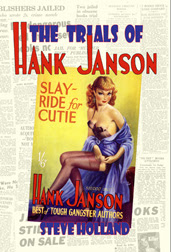
If you've read either The Mushroom Jungle or The Trials of Hank Janson, you'll perhaps recall that the earliest prosecutions against Americanised "gangster" fiction occurred in 1942 when authors Rene Raymond (James Hadley Chase) and Harold Kelly (Darcy Glinto) were both fined for novels published in the early years of the Second World War.
It's interesting to see the context in which these cases took place and worth quoting a paragraph from The Trials of Hank Janson which relates to prosecutions that took place in 1938-39.
A few months earlier, on 6 October 1941, the New Picture Press Ltd. of Arundel Street, Strand, were fined £200 with £21 costs at Reading for publishing improper issues of the magazine London Life.
The push against obscene material may have been the result of this case and two prosecutions in late 1941 which resulted in jail sentences. At West Riding Assizes, a 53-year-old man pleaded guilty to the indecent assault of four girls and three charges of sending indecent photographs through the post. He was sentenced to three years. It was noted during the case that the guilty man had a developed his obscene photographic business by contacting customers through a publication readily available on bookstalls.
A case was heard a week later at Sussex Assizes about a case of attempted buggery and indecent assault and of sending obscene prints through the post. This case resulted in a sentence of four years.
These two cases followed almost immediately the appearance of a League of Nations Annual Report published in Geneva on 14 November 1941 on activity relating to obscene publications. As mentioned above, almost all the instances of trafficking stopped by the Post Office involved material coming into the UK from abroad, mostly France but also America, Finland, Denmark and Sweden.
It seems plausible that this "perfect storm" of activity led to increased activity in 1942 and fines being issued against Road Floozie and Miss Callaghan Comes to Grief in March and May 1942, followed by the prosecution of authors and publishers at the Central Criminal Court in May.
An interesting coda to the above case involved Detective-sergeant Sidney Norman who said that "all books of this type would in future be seized by the police, wherever found." In fact, only a handful of court cases against booksellers followed that year, at least two involving the continued sale of the two prosecuted books.
It's interesting to see the context in which these cases took place and worth quoting a paragraph from The Trials of Hank Janson which relates to prosecutions that took place in 1938-39.
In the year ending June 30, 1939, only 40 offences of obscene publications were recorded in the United Kingdom, mostly destruction orders issued against magazines and photographs originating in the United States or France; in only 9 cases did the offending material originate in the UK. Between July 1939 and December 1940, the number of cases was down to 47, mostly (36 cases) involving publications from abroad.I've always thought that one of the reasons those particular novels—Miss Callaghan Comes to Grief by Chase and Road Floozie by Glinto—were targeted was their American settings; it seems likely that police constables gathering up American magazines for possible prosecution would have grabbed everything that looked similar.
A few months earlier, on 6 October 1941, the New Picture Press Ltd. of Arundel Street, Strand, were fined £200 with £21 costs at Reading for publishing improper issues of the magazine London Life.
The push against obscene material may have been the result of this case and two prosecutions in late 1941 which resulted in jail sentences. At West Riding Assizes, a 53-year-old man pleaded guilty to the indecent assault of four girls and three charges of sending indecent photographs through the post. He was sentenced to three years. It was noted during the case that the guilty man had a developed his obscene photographic business by contacting customers through a publication readily available on bookstalls.
A case was heard a week later at Sussex Assizes about a case of attempted buggery and indecent assault and of sending obscene prints through the post. This case resulted in a sentence of four years.
These two cases followed almost immediately the appearance of a League of Nations Annual Report published in Geneva on 14 November 1941 on activity relating to obscene publications. As mentioned above, almost all the instances of trafficking stopped by the Post Office involved material coming into the UK from abroad, mostly France but also America, Finland, Denmark and Sweden.
It seems plausible that this "perfect storm" of activity led to increased activity in 1942 and fines being issued against Road Floozie and Miss Callaghan Comes to Grief in March and May 1942, followed by the prosecution of authors and publishers at the Central Criminal Court in May.
An interesting coda to the above case involved Detective-sergeant Sidney Norman who said that "all books of this type would in future be seized by the police, wherever found." In fact, only a handful of court cases against booksellers followed that year, at least two involving the continued sale of the two prosecuted books.
Monday, July 13, 2015
Caught in the Act: convictions & imprisonment in the 1930s
An official government document on obscene publications reveals that there were a dozen cases between 1936 and 1957 where a conviction of imprisonment in excess of 18 months was awarded. Most of these were, as far as I'm aware, for obscene magazines and photographs, rather than books, but I'm planning to check out all twelve to see what information I can gather.
None made any great impact with the broadsheets, and only a couple caused more than a ripple in local papers, as far as I can find so far. This first, dating from 1936, generated only a single mention in one newspaper (The Citizen in Gloucester, 10 March 1936, which recorded a case heard on 7 March 1936 at Birmingham Quarter Sessions.
The same caveat applied to this second report from the 1930s which is brief and frustratingly lacking in detail.
None made any great impact with the broadsheets, and only a couple caused more than a ripple in local papers, as far as I can find so far. This first, dating from 1936, generated only a single mention in one newspaper (The Citizen in Gloucester, 10 March 1936, which recorded a case heard on 7 March 1936 at Birmingham Quarter Sessions.
I've found no further information on Moore, but Richard Conrad Kernick continued to live in the Bristol area and died in 1985. I haven't been able to find anything about the nature of the photographs and it's worth mentioning that something considered "grossly obscene" back in the mid-1930s may not be considered terribly "hard" today.CONSPIRACY UNMASKED
Sentence of nine months' hard labour was passed at Birmingham Sessions on Conrad Kernick (35), of Redland, Bristol, when he pleaded guilty to conspiracy in selling and publishing indecent photographs and books.
Kernick was charged jointly with a man named Howard Moore (41), of Sand Pits, Birmingham, who was sentenced to two years' hard labour.
Detective-Supt. Baguley, head of the Birmingham C.I.D., told the Recorder: "There can be no doubt that the arrest of these two men has brought to light one of the most extensive organisations for the manufacturing and circulating of grossly obscene photographs and books in this country; the master mind of the conspiracy being Moore."
The superintendent added that upwards of 210 persons whose names and addresses were found in the books of Moore and Kernick had been interviewed by the police. They were resident in all parts of England, Ireland, Wales and Scotland, and they included every walk of life—ministers of religion, schoolmasters, solicitors, librarians and civil servants.
"From many of these people," he said, "grossly obscene photographs and books have been recovered, all of which they obtained upon application to Moore, and they could have formed the subjects of many further charges."
The same caveat applied to this second report from the 1930s which is brief and frustratingly lacking in detail.
Pleading guilty at the Central Criminal Court yesterday to a charge of selling obscene literature, Edwin Henry Turvey (36), a salesman, was sentenced to two years' imprisonment.Notes from elsewhere reveal that Turvey was a wholesale bookseller and was sentenced "for publishing and selling an obscene book and photos". Turvey would later have a central role in the boom of paperbacks in the late 1940s.
Saturday, July 11, 2015
Alex Philip: two authors often conflated
My good friend John Herrington opened a little can of worms when he mentioned Alex Philip recently. John was trying to discover information about an author listed in Crime Fiction Bibliography for his crime related novel Complete Change (1926). A handful of other novels appeared under the same byline, including the 1927 Lost World novel The Painted Cliff, and it was assumed that these were by the same author, believed to have been an American who spent most of his life in Canada.
However, copyright records prove different and show that there are two authors, both known as Alex Philip, who were contemporaries but who worked thousands of miles apart.
Firstly we have British author Alexander John Philip, born in Marylebone, London, in 1879. He began his career as a boy assistant at the Chelsea public library in 1892, subsequently holding posts in Willesden and Hampstead before becoming chief librarian at Gravesend between 1903 and his retirement in 1946.
Philip was an author and publisher, responsible for a number of year books published for libraries, museums and art galleries. He was the owner, editor and publisher of the monthly magazine The Librarian between 1911-46. He is probably best known nowadays as the author of A Dickens Dictionary (1909) and A History of Gravesend and Its Surroundings (1954).
He married Yvonne J. B. De Plounevez or Minnie Ethel Wallis in 1905 in Gravesend 1905. He died in 1955.
The second Alexander Philip is often described as American, but he was born in Scotland in March 1882, the third son of John and Elizabeth Philip. The two had a large family, and emigrated to America in 1884 where John became a superintendent at a granite quarry in Bluehill, Maine. Alexander was educated in Maine.
In 1906, Alexander moved to Canada, following in the footsteps of his older brother, John, who had emigrated there two years earlier. In 1911, the two brothers were sharing a house together with their wives—Alexander was now married to Myrtle Tapley, also from Maine, who had emigrated to Canada in 1910.
In 1915, following the opening of the PGE railway the year before, Alex and Myrtle opened a hotel, the Rainbow Lodge, in Alta Lake. This helped create a tourism industry in British Columbia's Whistler Valley with the Rainbow Lodge becoming a hugely popular honeymoon destination.
Alex wrote three novels: The Crimson West (1925), The Painted Cliff and Whispering Leaves (1931), the first of these being the basis for Canada's first ever talkie, The Crimson Paradise (1933), now lost.
Further information about Philip's novels can be found in Carole Gerson's online essay 'Alex Philips: An Embarrassment in Our Literary History', which will give you a good idea of what she thinks of their quality.
Alex Philip continued to live in Alta Lake until his death in Vancouver on 10 October 1968, aged 86. His wife died on 15 August 1986, aged 95 in Squamish.
However, copyright records prove different and show that there are two authors, both known as Alex Philip, who were contemporaries but who worked thousands of miles apart.
Firstly we have British author Alexander John Philip, born in Marylebone, London, in 1879. He began his career as a boy assistant at the Chelsea public library in 1892, subsequently holding posts in Willesden and Hampstead before becoming chief librarian at Gravesend between 1903 and his retirement in 1946.
Philip was an author and publisher, responsible for a number of year books published for libraries, museums and art galleries. He was the owner, editor and publisher of the monthly magazine The Librarian between 1911-46. He is probably best known nowadays as the author of A Dickens Dictionary (1909) and A History of Gravesend and Its Surroundings (1954).
He married Yvonne J. B. De Plounevez or Minnie Ethel Wallis in 1905 in Gravesend 1905. He died in 1955.
The second Alexander Philip is often described as American, but he was born in Scotland in March 1882, the third son of John and Elizabeth Philip. The two had a large family, and emigrated to America in 1884 where John became a superintendent at a granite quarry in Bluehill, Maine. Alexander was educated in Maine.
In 1906, Alexander moved to Canada, following in the footsteps of his older brother, John, who had emigrated there two years earlier. In 1911, the two brothers were sharing a house together with their wives—Alexander was now married to Myrtle Tapley, also from Maine, who had emigrated to Canada in 1910.
In 1915, following the opening of the PGE railway the year before, Alex and Myrtle opened a hotel, the Rainbow Lodge, in Alta Lake. This helped create a tourism industry in British Columbia's Whistler Valley with the Rainbow Lodge becoming a hugely popular honeymoon destination.
Alex wrote three novels: The Crimson West (1925), The Painted Cliff and Whispering Leaves (1931), the first of these being the basis for Canada's first ever talkie, The Crimson Paradise (1933), now lost.
Further information about Philip's novels can be found in Carole Gerson's online essay 'Alex Philips: An Embarrassment in Our Literary History', which will give you a good idea of what she thinks of their quality.
Alex Philip continued to live in Alta Lake until his death in Vancouver on 10 October 1968, aged 86. His wife died on 15 August 1986, aged 95 in Squamish.
Labels:
Alex Philip,
Author
Friday, July 10, 2015
Comic Cuts - 10 July 2015
It started out as a rather unfocused week but I've managed to pull my act together to sort out some scans for an Italian publisher interested in putting together some war books along the lines of the titles I did for Prion a few years ago. The two volumes, each with four stories, concentrate on Italian artists Gino D'Antonio and Nevio Zeccara and will hopefully be the first of many books.
I think I spent all of last Friday cleaning up cover scans for the Mazo de la Roche piece that ran over the weekend, and much of the weekend setting up the Harry Sheldon bio. and cover gallery that appeared on Monday. Sometimes these blog pieces can take forever to piece together, but I must admit I enjoyed the change of pace following the frantic days earlier in the week.
I've been doing some little bits of research that will go towards a book I'm thinking about doing about the destruction of books in the early 1950s, possibly to be called Caught In The Act. I've been adding to my clippings files and trying to discover a little more about events in the 1930s that led to an explosion of activity in 1950, resulting in destruction orders being issued against thousands of books over the next few years and a string of prosecutions.
I may post a few odd bits and pieces over the coming weeks, research that I'm doing for the book into some of the back alleys that need exploring. Some of it might not be to all tastes, but they're part of the jigsaw that will eventually create the narrative of the book. I've had to touch on some dark areas in previous books—the murder of 5-year-old Miriam Gray had to be covered in The Trials of Hank Janson, for instance—and I believe we've managed to tackle some criminal subjects here in the past without being offensive. I've never been asked to censor a post here on Bear Alley and I'm always happy to correct errors.
Anyway, lets get the ball rolling with a lascivious pair (oo-er) of covers based on the life of 18th century sex mad Casanova, plus a clipping from 1997.
Things may continue to be patchy here at BA for a couple of weeks but hopefully I'll keep up at least a semi-regular pace.
I think I spent all of last Friday cleaning up cover scans for the Mazo de la Roche piece that ran over the weekend, and much of the weekend setting up the Harry Sheldon bio. and cover gallery that appeared on Monday. Sometimes these blog pieces can take forever to piece together, but I must admit I enjoyed the change of pace following the frantic days earlier in the week.
I've been doing some little bits of research that will go towards a book I'm thinking about doing about the destruction of books in the early 1950s, possibly to be called Caught In The Act. I've been adding to my clippings files and trying to discover a little more about events in the 1930s that led to an explosion of activity in 1950, resulting in destruction orders being issued against thousands of books over the next few years and a string of prosecutions.
I may post a few odd bits and pieces over the coming weeks, research that I'm doing for the book into some of the back alleys that need exploring. Some of it might not be to all tastes, but they're part of the jigsaw that will eventually create the narrative of the book. I've had to touch on some dark areas in previous books—the murder of 5-year-old Miriam Gray had to be covered in The Trials of Hank Janson, for instance—and I believe we've managed to tackle some criminal subjects here in the past without being offensive. I've never been asked to censor a post here on Bear Alley and I'm always happy to correct errors.
Anyway, lets get the ball rolling with a lascivious pair (oo-er) of covers based on the life of 18th century sex mad Casanova, plus a clipping from 1997.
Things may continue to be patchy here at BA for a couple of weeks but hopefully I'll keep up at least a semi-regular pace.
Labels:
Comics News
Wednesday, July 08, 2015
Sam Fuller
Amongst the mass of paperwork I've been digging through are a whole load of clippings of obituaries of writers and publishers. Source material for my old fanzine PBO, which I published back in the 1990s on behalf of the British Association of Paperback Collectors, which had a patchy existence and eventually fizzled out in 1998. I found this one (below), which was referenced in PBO issue 8 for which I compiled the following bibliography. I've updated it to include a recently published novel, rediscovered by Hard Case Crime
PUBLICATIONS
Novels
Burn, Baby, Burn. New York, Phoenix Press, 1935.
Test Tube Baby. New York, Godwin, 1936.
Make Up and Kiss. New York, Godwin, 1938.
The Dark Page. New York, Duell, Sloane & Pearce, 1944; as Murder Makes a Deadline, Bestseller, 1952.
The Naked Kiss (novelisation of screenplay). New York, Belmont, 1964.
Crown of India. New York, Award, 1966.
144 Piccadilly. New York, Richard C. Baron, 1971; London, New English Library, 1972.
Dead Pigeon on Beethoven Street (novelisation of screenplay). New York, Pyramid, 1974.
The Big Red One. London, Corgi, 1980.
Quint’s World. New York, Worldwide, 1988.
Brainquake. London, Titan Books (Hard Case Crime), 2014.
OTHERS
Films
As screenwriter: Hats Off (and story; as Sam Fuller), 1936); It Happened in Hollywood (and story), 1937; Gangs of New York (and story), 1938; Federal Man Hunt (story), 1939; Adventure in Sahara (story), 1938; Bowery Boy (story), 1940; Confirm or Deny (story), 1941; Power of the Press (story), 1943; Gangs on the Waterfront (story), 1943; Shockproof (and story), 1949; I Shot Jesse James (and director), 1949; The Baron of Arizona (and director, story), 1950; The Tanks Are Coming (story), 1951; The Steel Helmet (and director, producer, story), 1951; Fixed Bayonets (and director), 1951; Scandal Sheet (aka The Dark Page), 1952; Park Row (and director, producer), 1952; Pickup on South Street (and director), 1953; Hell and High Water (and director), 1954; The Command (adaptation), 1954; Prince of Players, 1955; House of Bamboo (additional dialogue, and director, actor [uncredited]), 1943; The Story of Esther Costello, 1957; Run of the Arrow (aka Hot Lead; and director, producer), 1957; Forty Guns (and director, producer), 1957; China Gate (and director, producer), 1957; Verboten! (and director, producer), 1959; The Crimson Kimono (and director, producer), 1959; Underworld U.S.A. (and director, producer), 1961; Merrill’s Marauders (and director), 1962; Shock Corridor (and director, producer), 1963; The Naked Kiss (aka The Iron Kiss; and director, producer), 1964; The Cape Town Affair, with Harold Medford (based on Pickup on South Street) 1967; Shark! (aka Maneater; and director), 1969; The Deadly Trackers (director, story), 1973; The Klansman (aka KKK, The Burning Cross), 1974; The Big Red One (aka Sam Fuller and the Big Red One; and director, actor), 1980; White Dog (and director, actor), 1982; Les Voleurs de la nuit (aka Thieves After Dark; and director, actor), 1984; El-Lanaa (director), 1984; Let’s Get Harry (aka The Rescue; story), 1986; Sans espoir de retour (aka Street of No Return; and director, actor), 1988; Falkenau, The Impossible (and actor), 1988;
As Actor: Pierrot le fou, 1965; Brigitte et Brigitte, 1965; The Last Movie (aka Chinchero), 1971; The Young Nurses (aka Nightingale, Young L.A. Nurses), 1973; Scott Joplin (TV documentary), 1977; Der Amerikanische Freund (aka The American Friend), 1977; 1941, 1979; Der Stand der Dinge (aka The State of Things), 1982; Hammett, 1983; Slapstick (of Another Kind), 1984; Le Sang des autres (aka Blood of Others; TV), 1984; A Return to Salem’s Lot, 1987; Helsinki Napoli All Night Long, 1988; Tell Me Sam, 1989; Sons, 1989; Scorpion, 1989; Hollywood Mavericks, 1990; Greek Fire Series (documentary), 1991; Missa on Musette? (aka Where Is Musette?), 1992; Golem, l’esprit de l’exil (aka Golem, the Spirit of the Exile), 1992; La Vie de boheme (aka Bohemian Life), 1992; Imaginary Crimes, 1994; Tigrero: A Film That Was Never Made, 1994; Somebody to Love, 1994; Anything for John, 1995; The Typewriter, the Rifle and the Movie Camera (documentary), 1996; Words (aka Milim), 1996; The End of Violence, 1997.
Teleplays: The Meanest Men in the West (and director), 1967; Tatort - Tote Taube in der Beethovenstrasse (aka Dead Pigeon on Beethoven Street; and director), 1972; The Day of Reckoning, 1972; Girls in Prison, 1994.
About Samuel Fuller
Samuel Fuller by Phil Hardy. London, Studio Vista, 1970; New York, Praeger, 1970.
Sam Fuller: Film is a battlefield: a critical study, with interviews, a filmography and a biography by Lee Server. Jefferson, N.C., McFarland, 1994.
PUBLICATIONS
Novels
Burn, Baby, Burn. New York, Phoenix Press, 1935.
Test Tube Baby. New York, Godwin, 1936.
Make Up and Kiss. New York, Godwin, 1938.
The Dark Page. New York, Duell, Sloane & Pearce, 1944; as Murder Makes a Deadline, Bestseller, 1952.
The Naked Kiss (novelisation of screenplay). New York, Belmont, 1964.
Crown of India. New York, Award, 1966.
144 Piccadilly. New York, Richard C. Baron, 1971; London, New English Library, 1972.
Dead Pigeon on Beethoven Street (novelisation of screenplay). New York, Pyramid, 1974.
The Big Red One. London, Corgi, 1980.
Quint’s World. New York, Worldwide, 1988.
Brainquake. London, Titan Books (Hard Case Crime), 2014.
OTHERS
Films
As screenwriter: Hats Off (and story; as Sam Fuller), 1936); It Happened in Hollywood (and story), 1937; Gangs of New York (and story), 1938; Federal Man Hunt (story), 1939; Adventure in Sahara (story), 1938; Bowery Boy (story), 1940; Confirm or Deny (story), 1941; Power of the Press (story), 1943; Gangs on the Waterfront (story), 1943; Shockproof (and story), 1949; I Shot Jesse James (and director), 1949; The Baron of Arizona (and director, story), 1950; The Tanks Are Coming (story), 1951; The Steel Helmet (and director, producer, story), 1951; Fixed Bayonets (and director), 1951; Scandal Sheet (aka The Dark Page), 1952; Park Row (and director, producer), 1952; Pickup on South Street (and director), 1953; Hell and High Water (and director), 1954; The Command (adaptation), 1954; Prince of Players, 1955; House of Bamboo (additional dialogue, and director, actor [uncredited]), 1943; The Story of Esther Costello, 1957; Run of the Arrow (aka Hot Lead; and director, producer), 1957; Forty Guns (and director, producer), 1957; China Gate (and director, producer), 1957; Verboten! (and director, producer), 1959; The Crimson Kimono (and director, producer), 1959; Underworld U.S.A. (and director, producer), 1961; Merrill’s Marauders (and director), 1962; Shock Corridor (and director, producer), 1963; The Naked Kiss (aka The Iron Kiss; and director, producer), 1964; The Cape Town Affair, with Harold Medford (based on Pickup on South Street) 1967; Shark! (aka Maneater; and director), 1969; The Deadly Trackers (director, story), 1973; The Klansman (aka KKK, The Burning Cross), 1974; The Big Red One (aka Sam Fuller and the Big Red One; and director, actor), 1980; White Dog (and director, actor), 1982; Les Voleurs de la nuit (aka Thieves After Dark; and director, actor), 1984; El-Lanaa (director), 1984; Let’s Get Harry (aka The Rescue; story), 1986; Sans espoir de retour (aka Street of No Return; and director, actor), 1988; Falkenau, The Impossible (and actor), 1988;
As Actor: Pierrot le fou, 1965; Brigitte et Brigitte, 1965; The Last Movie (aka Chinchero), 1971; The Young Nurses (aka Nightingale, Young L.A. Nurses), 1973; Scott Joplin (TV documentary), 1977; Der Amerikanische Freund (aka The American Friend), 1977; 1941, 1979; Der Stand der Dinge (aka The State of Things), 1982; Hammett, 1983; Slapstick (of Another Kind), 1984; Le Sang des autres (aka Blood of Others; TV), 1984; A Return to Salem’s Lot, 1987; Helsinki Napoli All Night Long, 1988; Tell Me Sam, 1989; Sons, 1989; Scorpion, 1989; Hollywood Mavericks, 1990; Greek Fire Series (documentary), 1991; Missa on Musette? (aka Where Is Musette?), 1992; Golem, l’esprit de l’exil (aka Golem, the Spirit of the Exile), 1992; La Vie de boheme (aka Bohemian Life), 1992; Imaginary Crimes, 1994; Tigrero: A Film That Was Never Made, 1994; Somebody to Love, 1994; Anything for John, 1995; The Typewriter, the Rifle and the Movie Camera (documentary), 1996; Words (aka Milim), 1996; The End of Violence, 1997.
Teleplays: The Meanest Men in the West (and director), 1967; Tatort - Tote Taube in der Beethovenstrasse (aka Dead Pigeon on Beethoven Street; and director), 1972; The Day of Reckoning, 1972; Girls in Prison, 1994.
About Samuel Fuller
Samuel Fuller by Phil Hardy. London, Studio Vista, 1970; New York, Praeger, 1970.
Sam Fuller: Film is a battlefield: a critical study, with interviews, a filmography and a biography by Lee Server. Jefferson, N.C., McFarland, 1994.
Labels:
Author,
Sam Fuller,
scrapbook
Monday, July 06, 2015
Harry Sheldon
Although for the most part Sheldon signed his work with only his surname, it was believed for many years that the artist's full name was Sidney Sheldon as it was given thus when Bonhams auctioned a great many Pan Books' art boards.
However, a closer look at the cover of Jean Overton Fuller's Born For Sacrifice (GP60, March 1957) shows the clear signature of Harry Sheldon—or more correctly H. Harry Sheldon, as it has also been credited.
Searching the net for anything about Sheldon, I noticed that there are a few other pieces of misinformation that has spread around the web: the BBC 'Your Paintings' website claims that Sheldon was born in 1923; and a Manchester Evening News obituary has appeared online with the date 17 February 2007, five years after Sheldon's death. Mutual Art.com reveals that "H. Harry Sheldon is a German visual artist who was born in 20th Century. Several works by the artist have been sold at auction."
Herbert Harry Sheldon was born on 23 June 1917 in Marple, Cheshire, the son of William Herbert Sheldon and his wife May (nee Willford), who were married the previous year. Harry had two younger brothers, Ronald Willford Sheldon (1919-2004) and Eric W. Sheldon (1922-1943).
Sheldon was one of four generations of family artists and studied at Manchester School of Art and under L. S. Lowry at Salford Technical School, Lancashire. At the outbreak of the Second World War he joined the Coldstream Guards but was later commissioned into the 8th Gurkha Rifles.
In 1943, Lieutenant Sheldon was about to be invalided home from a Karachi hospital when his impromptu exhibition of artwork impressed General Claude Auchinleck, Commander in Chief, India, who persuaded him to stay in India as an official war artist. Auchinleck presented one of Sheldon's pictures—a bearded, turbaned Sikh in the Viceroy's Bodyguard—to Lord Louis Mountbatten, who immediately wrote to the artist, describing the gift as "a magnificent picture" which he was taking to be hung in Government House, Singapore, as a reminder of how much was owed to the Indian Army. Mountbattan also revealed that he had requested Sheldon's services for South East Asia Command; without consulting the artist, Auchinleck turned Mountbatten down. The letter remained one of Sheldon's prized possessions for the rest of his life and the portrait was later hung by Mountbatten at Broadlands.
Auchinleck sent Sheldon to Italy to draw lightning sketches of the Gurkhas in action in Italy. In 1945, he was flown back to London to arrange an exhibition of his war paintings. He left the services with the rank of Captain.
Sheldon's war art was described as graphically capturing the horror of war during the last years of the Raj. "He left behind a formidable legacy which included portraits of legendary Indian Army commanders," including Earl Mountbatten, Field-Marshall Lord Wavell, Viceroy of India, General Sir Frederick Browning, Field Marshal Viscount Slim and all the Indian Army VCs, along with pictures of sketches showing the brutality of warfare.
His friend, art critic Sydney Reynolds, said that "Without doubt, Sheldon, a watercolourist, was the outstanding war artist of his time in that theatre; only the River Kwai sketches may be considered more thought-provoking and emotionally-charged." His artwork is now widely held in Indian Army and British military museums.
After the war, Sheldon held a number of one man shows in Delhi, Cairo and London, and frequently exhibited at the Royal Society of Painters in Watercolours and Royal Society of Portrait Painters. It was probably his talent for portraits that earned him work at Pan Books in the early 1960s, his covers often featuring photorealistic figures. He painted a series of covers for Mazo de la Roche's family saga the Whiteoak's of Jalna but also found himself producing covers for crime thrillers which also incorporated a strong female element.
Sheldon, who was elected FRSA in 1953, lived in Berkhamsted, Herts., and continued to paint watercolours until his was about eighty. "He loved to paint people and scenes and even up to four years before his death, could be seen sitting at his easel in the high street in Berkhamsted where he lived," said Sidney Reynolds. "He never owned a car and used to exclude them from his urban scenes. He considered them noisy and unnecessary."
Sheldon, who suffered from Parkinson's Disease, died on 26 February 2002, aged 84. His wife, Joan (nee Aspinall), whom he married in 1940, predeceased him by two years. His son Paul E. Sheldon is considered one of the leading scraperboard artists in Europe.
In 2014, a newly-built retirement home in Berkhamsted was named Sheldon Lodge in his honour.
Obituaries: Manchester Evening News (dated 17 February 2007), The Scotsman (dated 7 June 2002).
COVER CHECKLIST
Pan Books
GP60 Born for Sacrifice by Jean Overton Fuller (Mar 1957)
X89 Centenary at Jalna by Mazo de la Roche (Jun 1961)
M11 Angelique: The Marquise of the Angels by Sergeanne Golon (Jun 1961)
G371 The Passionate City by Ian Stuart Black (Aug 1961)
G506 The Female of the Species by Sapper (Nov 1961)
G510 You Can't Hit a Woman by Peter Cheyney (1961)
G517 The Origin of Evil by Ellery Queen (Dec 1961)
G519 The Case of the Green-Eyed Sister by Erle Stanley Gardner (Jan 1962)
X136 Morning at Jalna by Mazo de la Roche (Jul 1962)
X141 The Whiteoak Brothers by Mazo de la Roche (1962)
X157 Whiteoak Heritage by Mazo de la Roche (1962)
X159 Renny's Daughter by Mazo de la Roche (1962)
X257 The Case of the Sunbather's Diary by Erle Stanley Gardner (Nov 1963)
X291 The Case of the Terrified Typist by Erle Stanley Gardner (Mar 1964)
G667 The Urgent Hangman by Peter Cheyney (May 1964)
G680 I'll Say She Does! by Peter Cheyney (Aug 1964)
However, a closer look at the cover of Jean Overton Fuller's Born For Sacrifice (GP60, March 1957) shows the clear signature of Harry Sheldon—or more correctly H. Harry Sheldon, as it has also been credited.
Searching the net for anything about Sheldon, I noticed that there are a few other pieces of misinformation that has spread around the web: the BBC 'Your Paintings' website claims that Sheldon was born in 1923; and a Manchester Evening News obituary has appeared online with the date 17 February 2007, five years after Sheldon's death. Mutual Art.com reveals that "H. Harry Sheldon is a German visual artist who was born in 20th Century. Several works by the artist have been sold at auction."
Herbert Harry Sheldon was born on 23 June 1917 in Marple, Cheshire, the son of William Herbert Sheldon and his wife May (nee Willford), who were married the previous year. Harry had two younger brothers, Ronald Willford Sheldon (1919-2004) and Eric W. Sheldon (1922-1943).
Sheldon was one of four generations of family artists and studied at Manchester School of Art and under L. S. Lowry at Salford Technical School, Lancashire. At the outbreak of the Second World War he joined the Coldstream Guards but was later commissioned into the 8th Gurkha Rifles.
In 1943, Lieutenant Sheldon was about to be invalided home from a Karachi hospital when his impromptu exhibition of artwork impressed General Claude Auchinleck, Commander in Chief, India, who persuaded him to stay in India as an official war artist. Auchinleck presented one of Sheldon's pictures—a bearded, turbaned Sikh in the Viceroy's Bodyguard—to Lord Louis Mountbatten, who immediately wrote to the artist, describing the gift as "a magnificent picture" which he was taking to be hung in Government House, Singapore, as a reminder of how much was owed to the Indian Army. Mountbattan also revealed that he had requested Sheldon's services for South East Asia Command; without consulting the artist, Auchinleck turned Mountbatten down. The letter remained one of Sheldon's prized possessions for the rest of his life and the portrait was later hung by Mountbatten at Broadlands.
Auchinleck sent Sheldon to Italy to draw lightning sketches of the Gurkhas in action in Italy. In 1945, he was flown back to London to arrange an exhibition of his war paintings. He left the services with the rank of Captain.
Sheldon's war art was described as graphically capturing the horror of war during the last years of the Raj. "He left behind a formidable legacy which included portraits of legendary Indian Army commanders," including Earl Mountbatten, Field-Marshall Lord Wavell, Viceroy of India, General Sir Frederick Browning, Field Marshal Viscount Slim and all the Indian Army VCs, along with pictures of sketches showing the brutality of warfare.
His friend, art critic Sydney Reynolds, said that "Without doubt, Sheldon, a watercolourist, was the outstanding war artist of his time in that theatre; only the River Kwai sketches may be considered more thought-provoking and emotionally-charged." His artwork is now widely held in Indian Army and British military museums.
After the war, Sheldon held a number of one man shows in Delhi, Cairo and London, and frequently exhibited at the Royal Society of Painters in Watercolours and Royal Society of Portrait Painters. It was probably his talent for portraits that earned him work at Pan Books in the early 1960s, his covers often featuring photorealistic figures. He painted a series of covers for Mazo de la Roche's family saga the Whiteoak's of Jalna but also found himself producing covers for crime thrillers which also incorporated a strong female element.
Sheldon, who was elected FRSA in 1953, lived in Berkhamsted, Herts., and continued to paint watercolours until his was about eighty. "He loved to paint people and scenes and even up to four years before his death, could be seen sitting at his easel in the high street in Berkhamsted where he lived," said Sidney Reynolds. "He never owned a car and used to exclude them from his urban scenes. He considered them noisy and unnecessary."
Sheldon, who suffered from Parkinson's Disease, died on 26 February 2002, aged 84. His wife, Joan (nee Aspinall), whom he married in 1940, predeceased him by two years. His son Paul E. Sheldon is considered one of the leading scraperboard artists in Europe.
In 2014, a newly-built retirement home in Berkhamsted was named Sheldon Lodge in his honour.
Obituaries: Manchester Evening News (dated 17 February 2007), The Scotsman (dated 7 June 2002).
COVER CHECKLIST
Pan Books
GP60 Born for Sacrifice by Jean Overton Fuller (Mar 1957)
X89 Centenary at Jalna by Mazo de la Roche (Jun 1961)
M11 Angelique: The Marquise of the Angels by Sergeanne Golon (Jun 1961)
G371 The Passionate City by Ian Stuart Black (Aug 1961)
G506 The Female of the Species by Sapper (Nov 1961)
G510 You Can't Hit a Woman by Peter Cheyney (1961)
G517 The Origin of Evil by Ellery Queen (Dec 1961)
G519 The Case of the Green-Eyed Sister by Erle Stanley Gardner (Jan 1962)
X136 Morning at Jalna by Mazo de la Roche (Jul 1962)
X141 The Whiteoak Brothers by Mazo de la Roche (1962)
X157 Whiteoak Heritage by Mazo de la Roche (1962)
X159 Renny's Daughter by Mazo de la Roche (1962)
X257 The Case of the Sunbather's Diary by Erle Stanley Gardner (Nov 1963)
X291 The Case of the Terrified Typist by Erle Stanley Gardner (Mar 1964)
G667 The Urgent Hangman by Peter Cheyney (May 1964)
G680 I'll Say She Does! by Peter Cheyney (Aug 1964)
Labels:
Artist,
Harry Sheldon
Harry Sheldon cover gallery
Pan Books GP60 Born for Sacrifice by Jean Overton Fuller (Mar 1957)
Pan Books X89 Centenary at Jalna by Mazo de la Roche (Jun 1961)
Pan Books M11 Angelique: The Marquise of the Angels by Sergeanne Golon (Jun 1961)
Pan Books G371 The Passionate City by Ian Stuart Black (Aug 1961)
Pan Books G506 The Female of the Species by Sapper (Nov 1961)
Pan Books G510 You Can't Hit a Woman by Peter Cheyney (1961)
Pan Books G517 The Origin of Evil by Ellery Queen (Dec 1961)
Pan Books G519 The Case of the Green-Eyed Sister by Erle Stanley Gardner (Jan 1962)
Pan Books X136 Morning at Jalna by Mazo de la Roche (Jul 1962)
Pan Books X141 The Whiteoak Brothers by Mazo de la Roche (1962)
Pan Books X157 Whiteoak Heritage by Mazo de la Roche (1962)
Pan Books X159 Renny's Daughter by Mazo de la Roche (1962)
Pan Books X257 The Case of the Sunbather's Diary by Erle Stanley Gardner (Nov 1963)
Pan Books X291 The Case of the Terrified Typist by Erle Stanley Gardner (Mar 1964)
Pan Books G667 The Urgent Hangman by Peter Cheyney (May 1964)
Pan Books G680 I'll Say She Does! by Peter Cheyney (Aug 1964)
Saturday, July 04, 2015
Mazo de la Roche cover gallery
The following cover gallery covers Mazo de la Roche's Whiteoaks of Jalna series. The books are listed in narrative order rather than order of publication.
Building of Jalna (Little Brown, 1944)
Pan Books 375, (May) 1956. Cover by Bruce Windo
Pan Books X158, 1962. Cover by unknown
Pan Books 0330-10158-7, (Feb) 1971. Cover still. TV tie-in.
Morning at Jalna (Little Brown, 1960)
Pan Books X136, (Jul) 1962, 269pp, 3/6. Cover by Harry Sheldon
Pan Books 0330-10136-6, (Oct) 1969.
---- Xth imp., 1972. TV tie-in.
Mary Wakefield (Little Brown, 1949)
Pan Books 186, (Nov) 1951, 2/-. Cover by unknown
----, Xth imp., 1953, 2/-. as above
Pan Books X133, 1962.
----, Xth imp., 1965. Cover by Gordon King
Pan Books 0330-10133-1, (Feb) 1971. TV tie-in.
Young Renny (Little Brown, 1935)
Pan Books 65, (Oct) 1948, 256pp, 2/-. Cover by unknown
----, 2nd imp., 1951.
----, 3rd imp., 1953.
Pan Books G299, 4th imp., 1959.
Pan Books X140, 5th imp., 1962. Cover by Helweg
----, 6th imp., 1965.Cover by Gordon King
Whiteoak Heritage (Little Brown, 1940)
Pan Books 98, (Aug) 1949, 224pp, 2/-. Cover by Allan Pollack
----, 2nd imp., 1952. Cover by unknown
----, 3rd imp., 1955.
Pan Books X157, 4th imp., 1962, 255pp, 3/6. Cover by Harry Sheldon
----, 5th imp., 1963. as above
----, 6th imp., 1966, 255pp, 3/6.
The Whiteoak Brothers (Little Brown, 1953)
Pan Books 405, (Feb) 1957. Cover by Jack Keay
Pan Books X141, 2nd imp., 1962, 254pp, 3/6. Cover by Harry Sheldon
----, 3rd imp., 1963. as above
Pan Books M199, 1967.
Jalna (Little Brown, 1927)
Pan Books 196, (Feb) 1952. Cover by unknown
Pan Books X132, 1962. Cover by unknown
----, Xth imp., 1965. Cover by Gordon King
Pan Books 0330-10132-3, (Mar) 1969. Cover as above
----, Xth imp., TV tie-in.
Whiteoaks of Jalna (Little Brown, 1929; as Whiteoaks, Macmillan, 1929)
Pan Books X38, (May) 1959.
Pan Books M198, 1967. Cover by Hans Helweg
Finch's Fortune (Little Brown, 1932)
Pan Books X43, (Nov) 1959.
Pan Books M200, 1967. Cover by Hans Helweg
The Master of Jalna (Little Brown, 1933)
Pan Books 281, (Apr) 1954. Cover by unknown
Pan Books X125, 2nd imp., 1962.
----, 3rd imp., 1962.
----, 4th imp., 1965, 271pp, 3/6. Cover by Gordon King
Pan Books M262, 5th imp., 1968, 271pp, 5/-. as above
Pan Books 0330-20262-6, c.1969.
Whiteoak Harvest (Little Brown, 1936)
Pan Books GP87, (Nov) 1957. Cover by Sam Peffer
Pan Books X118, 1962.
----, Xth imp., c.1965, 3/6. Cover by ?
Pan Books 0330-10118-8, (Mar) 1969. Cover as above
Wakefield's Course (Little Brown, 1941)
Pan Books X50, (Feb) 1960, 330pp, 3/6. Cover by Sam Peffer
----, 2nd imp., 1961. Cover as above
Pan Books 0330-10050-5, c.1969.
Return to Jalna (Little Brown, 1946)
Pan Books X60, (Jun) 1960, 379pp, 3/6. Cover by unknown
----, 2nd imp., 1961. as above
----, 3rd imp., 1962. as above
Pan Books 0330-10060-2, (Jul) 1969.
Renny's Daughter (Little Brown, 1951)
Pan Books 353, (Aug) 1955. Cover by unknown
----, 2nd imp.
Pan Books X159, 3rd imp., 1962, 283pp, 3/6. Cover by Harry Sheldon
Pan Books M201, 1967.
Pan Books 0330-20201-4, c.1972. TV tie-in.
Variable Winds at Jalna (Little Brown, 1954)
Pan Books G154, (Aug) 1958. Cover by Sam Peffer
----, 2nd imp., 1959
----, 3rd imp., 1960
----, 4th imp., 1961.
Pan Books X195, 5th imp., 1963.
---- 6th imp., 1965, 251pp, 3/6.
Centenary at Jalna (Little Brown, 1958)
Pan Books X89, (Jun) 1961, 317pp, 3/6. Cover by Harry Sheldon
----, 2nd imp., 1961, 317pp, 3/6. as above
----, 3rd imp., 1962, 317pp, 3/6. as above
----, Xth imp., c.1965, 3/6. Cover by ?
Pan Books 0330-02069-2, c.1969.
Building of Jalna (Little Brown, 1944)
Pan Books 375, (May) 1956. Cover by Bruce Windo
Pan Books X158, 1962. Cover by unknown
Pan Books 0330-10158-7, (Feb) 1971. Cover still. TV tie-in.
Morning at Jalna (Little Brown, 1960)
Pan Books X136, (Jul) 1962, 269pp, 3/6. Cover by Harry Sheldon
Pan Books 0330-10136-6, (Oct) 1969.
---- Xth imp., 1972. TV tie-in.
Mary Wakefield (Little Brown, 1949)
Pan Books 186, (Nov) 1951, 2/-. Cover by unknown
----, Xth imp., 1953, 2/-. as above
Pan Books X133, 1962.
----, Xth imp., 1965. Cover by Gordon King
Pan Books 0330-10133-1, (Feb) 1971. TV tie-in.
Young Renny (Little Brown, 1935)
Pan Books 65, (Oct) 1948, 256pp, 2/-. Cover by unknown
----, 2nd imp., 1951.
----, 3rd imp., 1953.
Pan Books G299, 4th imp., 1959.
Pan Books X140, 5th imp., 1962. Cover by Helweg
----, 6th imp., 1965.Cover by Gordon King
Whiteoak Heritage (Little Brown, 1940)
Pan Books 98, (Aug) 1949, 224pp, 2/-. Cover by Allan Pollack
----, 2nd imp., 1952. Cover by unknown
----, 3rd imp., 1955.
Pan Books X157, 4th imp., 1962, 255pp, 3/6. Cover by Harry Sheldon
----, 5th imp., 1963. as above
----, 6th imp., 1966, 255pp, 3/6.
The Whiteoak Brothers (Little Brown, 1953)
Pan Books 405, (Feb) 1957. Cover by Jack Keay
Pan Books X141, 2nd imp., 1962, 254pp, 3/6. Cover by Harry Sheldon
----, 3rd imp., 1963. as above
Pan Books M199, 1967.
Jalna (Little Brown, 1927)
Pan Books 196, (Feb) 1952. Cover by unknown
Pan Books X132, 1962. Cover by unknown
----, Xth imp., 1965. Cover by Gordon King
Pan Books 0330-10132-3, (Mar) 1969. Cover as above
----, Xth imp., TV tie-in.
Whiteoaks of Jalna (Little Brown, 1929; as Whiteoaks, Macmillan, 1929)
Pan Books X38, (May) 1959.
Pan Books M198, 1967. Cover by Hans Helweg
Finch's Fortune (Little Brown, 1932)
Pan Books X43, (Nov) 1959.
Pan Books M200, 1967. Cover by Hans Helweg
The Master of Jalna (Little Brown, 1933)
Pan Books 281, (Apr) 1954. Cover by unknown
Pan Books X125, 2nd imp., 1962.
----, 3rd imp., 1962.
----, 4th imp., 1965, 271pp, 3/6. Cover by Gordon King
Pan Books M262, 5th imp., 1968, 271pp, 5/-. as above
Pan Books 0330-20262-6, c.1969.
Whiteoak Harvest (Little Brown, 1936)
Pan Books GP87, (Nov) 1957. Cover by Sam Peffer
Pan Books X118, 1962.
----, Xth imp., c.1965, 3/6. Cover by ?
Pan Books 0330-10118-8, (Mar) 1969. Cover as above
Wakefield's Course (Little Brown, 1941)
Pan Books X50, (Feb) 1960, 330pp, 3/6. Cover by Sam Peffer
----, 2nd imp., 1961. Cover as above
Pan Books 0330-10050-5, c.1969.
Return to Jalna (Little Brown, 1946)
Pan Books X60, (Jun) 1960, 379pp, 3/6. Cover by unknown
----, 2nd imp., 1961. as above
----, 3rd imp., 1962. as above
Pan Books 0330-10060-2, (Jul) 1969.
Renny's Daughter (Little Brown, 1951)
Pan Books 353, (Aug) 1955. Cover by unknown
----, 2nd imp.
Pan Books X159, 3rd imp., 1962, 283pp, 3/6. Cover by Harry Sheldon
Pan Books M201, 1967.
Pan Books 0330-20201-4, c.1972. TV tie-in.
Variable Winds at Jalna (Little Brown, 1954)
Pan Books G154, (Aug) 1958. Cover by Sam Peffer
----, 2nd imp., 1959
----, 3rd imp., 1960
----, 4th imp., 1961.
Pan Books X195, 5th imp., 1963.
---- 6th imp., 1965, 251pp, 3/6.
Centenary at Jalna (Little Brown, 1958)
Pan Books X89, (Jun) 1961, 317pp, 3/6. Cover by Harry Sheldon
----, 2nd imp., 1961, 317pp, 3/6. as above
----, 3rd imp., 1962, 317pp, 3/6. as above
----, Xth imp., c.1965, 3/6. Cover by ?
Pan Books 0330-02069-2, c.1969.
Subscribe to:
Posts (Atom)