Saturday, April 14, 2018

Comic Scene #0 (August 2018)

Comic Scene is a very welcome newcomer published by ComicFlix.org Publishing. The new monthly is due to come out in August, but before that we have an issue zero to promote subscriptions. To be published on 1 May, this 64-page magazine has a lot of top-notch content that will make fascinating reading to anyone with an interest in British comics and annuals.

We have not had a UK comics' magazine since Crikey! folded in 2011 and suddenly we have two: Fanscene was released earlier this year as a free-to-download study of British comics' fandom, a megalithic 328 pager; and now Comic Scene, an actual printed artefact that picks up the baton of those old fanzines and carries it into 2018.

British comics have a history dating back 150 years if you count that history from the debut of the first recurring comic strip character (Ally Sloper in 1867), but interest in and research about those ancient characters is as scarce as the papers themselves. Indeed, since the demise of Denis Gifford's ACE Newsletter, there is very little research done these days on any papers that appeared pre-Eagle.

And here we have the dilemma of creating a comics fanzine: do you concentrate only on titles that your audience is going to be aware of and ignore everything that came before, or do you try to put today's comics into some sort of context by looking at older comics and characters.

It could be argued that the original Eagle is already the subject of two fanzines (Eagle Times and Spaceship Away!), so it can be safely put to one side. I think Crikey! perhaps proved that older material and humour material didn't translate into sales.

Comic Scene takes the other route with very little content covering comics or events over 30 years old, thus pitching it to an audience of, say, 45-year-olds, which seems about right (I keep forgetting that 2000 AD started over 40 years ago and is itself ancient history to most people!). With the caveat that the paper covers chiefly the last thirty or so years, I think the debut issue zero might suffer from a desire to pack too much in. Most of the features are one or two pages, packing in 28 features into 64 pages, with 5 pages dedicated to a comic strip (Captain Scotland) and 4 pages to news (which will make a little more sense once the paper is monthly, although most people who want to to be kept up to date will probably have already found their needs met online). Longer articles with more depth would be more welcome.

For me, the top features will always involve reminiscences by or interviews with people who have been involved one way or another with the industry, so the pick of the content is, in no particular order, John McShane on the history of Toxic (part 1); Tim Pilcher's look back at Deadline; Pat Mills' opinionated 'The Last Word' on whether characters should die with their creators; an albeit brief interview with Peter Milligan about his upcoming Titan series The Prisoner; Steve McManus and Christopher Lowder both discussing the merger of Valiant and Lion; and John Wagner on the origins of his recent mini-series Rok of the Reds.

Benoit Peeters offers an interesting opinion piece, arguing that comics help us relive our childhood (although I would argue that reading, say, Preacher, was a very different experience to my boyhood reading of Valiant).  Meanwhile, in 'The Cartmel Factor', Ian Wheeler looks back at Doctor Who strips from the era of Andrew Cartmel's script-editing days on Dr Who Magazine.

The Best of Small Press Comics looks at Wolf and Flintlock and the June 2018-released graphic novel Apollo by Matt Fitch & Chris Baker (Selfmadehero) is previewed by Stephen Jewell. This is the kind of thing that I would like to see more of – previews rather than "news".

Elsewhere in Comic Scene we glance at an old Thunderbirds storyline from TV Century 21,  take a look at the debut issue of Shiver & Shake, look back at the Free Comic Book Day releases from 2000AD and the Batman v. Dredd crossover Judgement on Gotham, and discover a brief introduction to collecting books about Roy of the Rovers. Some choices seem a little odd, such as an article on the many faces of Dan Dare that doesn't include a page by Dan's creator, Frank Hampson. A chance to do something substantial on Steve Dillon is rather thrown away in a few hundred words and discussion of Mike Higgs' colour cover for Unicorn fanzine might have been better served in the pages of Fanscene.

Despite these misgivings – and let's not forget that this is Tony Foster's Comic Scene, not Steve Holland's Comic Scene – it's a solid start to what could become that rarest of things – a long-running magazine about British comics.

Details about subscriptions can be obtained from www.comicscene.org. Rates for print issues for the UK are £5.75 for one issue; £33 for 6 issues; £63 for 12 issues.You can get a pdf version for £4.75 (1), £27 (6) or £53 (12).

Payment can be made via PayPal to comicsceneuk@gmail.com. For other options, and for international rates for the print edition, visit the website.

Tony tells me that the monthly will include features on Judge Dredd v Judge Death, 2000AD, Halo Jones, Girls Comics including Tammy / Jinty / Bunty, 80 years of the Beano, The Prisoner, Return of Roy of the Rovers, Six Million Dollar Man v Mach One, Charley’s War, 20 years of comic blog DownTheTubes, 40 years of Starlord and Misty, 50 years of fandom and comic con, 30 years of Tank Girl, Deadline & Hellblazer, Vertigo at 25, the new Doctor Who Jodi Whittaker, Superman at 80, Captain Britain / Mega City One / V For Vendetta and comics on the big and small screen, Miracleman, DC and Marvel in the U.K.,  European comics plus all the latest news and gossip from the comic, small press, cosplay and related media industry.

J Macfarlane

J. MACFARLANE
by
Robert J. Kirkpatrick

A search for information about the illustrator J. Macfarlane would almost certainly lead to the conclusion that he was Australian. Several websites refer to him as a “late colonial period painter, political cartoonist and illustrator [who] made dramatic historical drawings of Australian exploration subjects…..:, and that he “flourished c. 1890 – c. 1898.” The Booktryst blog, in November 2011, stated “Little is known about the artist J. Macfarlane. It appears that he was an Australian painter and illustrator who contributed cartoons to The Barrier Daily Truth in the 1890s.”

However, Macfarlane was born and brought up in Scotland, and while he did spend a few years in Australia at the end of the 19th century, most of his career was spent in England.

He was born in Bonhill, Dunbartonshire, on 15 May 1857, and christened John Fleming Cullen Macfarlane, the last of nine children of Patrick Macfarlane (1822-1904), a druggist, and his wife Elizabeth, née McKenzie (1819-1885). The family lived in Bonhill for many years, moving from Maxwell’s Land, Bridge Street, to Myrtle House, Main Street, in the 1860s.

It is not known where Macfarlane received his artistic training, but by the time of the 1881 census he was already working as an artist, living with his parents in Bonhill. Shortly after this he moved to Australia, probably accompanied by Louisa Wallace (born in Campbeltown, Argyllshire, in 1854), as they were married on 9 November 1883 in Moonee Ponds, Victoria. They went on have five children, all born in Victoria, between 1885 and 1896.

Macfarlane appears to have established himself as an artist in Australia in 1884, when he collaborated with the wood engraver F.A. Sleap on a series of illustrations (“Sketches on the Coast”) for The Illustrated Australian News. In 1890, Macfarlane and Sleap were also working for The Australian News and Musical Times. Macfarlane subsequently became sympathetic to the cause of striking miners at Broken Hill, an isolated mining town in New South Wales, and he contributed drawings illustrating the dispute to The Queensland Leader. Also in that year he illustrated his first book, At The Races: The Melbourne Cup 1892. In 1898, he began contributing cartoons to The Barrier Daily Truth, a newspaper which had been launched in January 1898 in Broken Hill, again offering support to the local miners.

Macfarlane left Australia shortly after this and came to England, as in the 1901 census he was recorded at “St. David’s”, Mitcham Road, Tooting, with his wife and five children. By then, he had begun a second career as an illustrator of children’s books, with The Romance of Greystones: An Australian Story, written by H. Arnold Nelson and published by Ward, Lock & Co. in 1899. (He had earlier contributed illustrations to The Windsor Magazine in 1897 and 1898, and to Harper’s New Monthly Magazine and The Ludgate Monthly in 1898). Ward, Lock & Co., founded in 1854 as Ward & Lock, had opened an office in Melbourne, Australia in 1884, and it went on to publish a large number of Australian children’s stories which appeared simultaneously in both the UK and Australia. Macfarlane, with his albeit brief experience of life in Australia, was an obvious choice to illustrate some of these, and between 1900 and 1924 he illustrated several stories by authors such as Ethel Turner, her sister Lilian Turner, Mary Grant Bruce and Lilian M. Pyke (including her three famous Australian public school stories Max the Sport, Jack of St. Virgil’s and The Best School of All). Indeed, most of his work was for Ward, Lock & Co. – he illustrated well over 40 books for the company.

He also illustrated a handful of re-issues of classic English novels, including Robinson Crusoe, Walter Scott’s Talisman, and, most notably, Tom Brown’s Schooldays, published by Macmillan & Co. in 1904, with no fewer than 32 black and white plates.

In 1901, he began contributing to the boys’ story paper The Captain, with illustrations for a series of Boer War stories by John Mackie, and in 1906 he began contributing to The Boy’s Own Paper. He was also an occasional contributor to The Sphere.

At the time of the 1911 census, he was living with his wife and two of his children at 33 Crockerton Road, Tooting.   In 1921, he re-drew six of John Tenniels’ illustrations for Alice in Wonderland – Alice and the White Rabbit, The Dodo Presenting the Thimble to Alice, The Cheshire Cat, The Mad Tea-Party, The Mock Turtle's Story, The Trial of the Knave of Hearts – with the new illustrations initially being produced as large colour posters. They were subsequently used in a new edition of the book published by Macmillan in 1927. This was apparently the first instance of Macmillan licensing illustrations for the story by someone other than Tenniel.

By the end of the 1920s, Macfarlane appears to have retired, as no further books containing his illustrations have been traced after this date other then a couple of re-issues of earlier titles.

His wife had died in Wandsworth in September 1919, and was buried in Putney Vale Cemetery, Wandsworth, on 12 September. Macfarlane himself died at his home, 9 Homefield Road, Wimbledon, on 9 October 1936, and was buried alongside his wife four days later.


PUBLICATIONS

Books illustrated by J. Macfarlane
At the Races: The Melbourne Cup 1892, Robert A. Thompson & Co., 1892
Australian Bush Tales by George Dunderdale, Ward, Lock & Co., 1898
Cola Monti, or The Story of a Genius by Mrs Craik, W. & R. Chambers, 1898 (with R. Barnes) (re-issue)
The Romance of the Greystones: An Australian Story by H. Arnold Nelson, Ward, Lock & Co., 1899
True as Steel: Stories of Courage and Conflict by Gordon Stables and others, John F. Shaw, 1900 (with other artists)
Our Darlings: The Children’s Treasury of Pictures and Stories, John F, Shaw, 1900 (with other artists
Robinson Crusoe by Daniel Defoe, Macmillan & Co., 1900 (re-issue)
The Talisman by Walter Scott, Macmillan & Co., 1900 (re-issue)
Duck Lake: Stories of the Canadian Backwoods by E. Ryerson Young, Religious Tract Society, 1900
The Warrigal’s Well: A North Australian Story by Donald MacDonald & John F. Edgar, Ward, Lock & Co., 1901
The French Prisoners: A Story for Boys by Edward Bertz, Macmillan & Co., 1902 (re-issue)
Green Barley: An Australian Story by H. Arnold Nelson, Ward, Lock & Co., 1902
Captain Cook by Walter Besant, Macmillan & Co., 1903 (re-issue)
Under the She-Oaks by Elisabeth Boyd Bayly, Religious Tract Society, 1903
A Daughter of the People by Murray Home, Ward, Lock & Co., 1904
Tom Brown’s Schooldays by Thomas Hughes, Macmillan & Co., 1904 (re-issue)
Captain Polly by Sophie Dwett, T. Nelson & Sons, 1906
In the Mist of the Mountains by Ethel Sybil Turner, Ward, Lock & Co., 1906
A Golden Shadow by L.T. Meade, Ward, Lock & Co., 1906
The Willoughby Boys by Emily Hartley, T. Nelson & Sons, 1906 (re-issue)
The Leather Mask by Ambrose Pratt, Ward, Lock & Co., 1907
Feadora’s Failure by Lucie E. Jackson, Ward, Lock & Co., 1907
From Scapegrace to Hero, or The Adventures and Triumphs of Jem Blake by Ernest Protheroe, Religious Tract Society, 1907
The Stolen Voyage by Ethel Sybil Turner, Ward, Lock & Co., 1907
Grimm’s Fairy Tales: A Selection from the “Household Stories” of the Brothers Grimm, Alfred Trice Martin (ed.), Macmillan & Co., 1908
Days that Speak: A Story of Australian Child Life by Evelyn Goode, Ward, Lock & Co., 1908
First Person Paramount by Ambrose Pratt, Ward, Lock & Co., 1908
Two Girls in a Siege: A Tale of the Great Civil War by E.C. Kenyon, Religious Tract Society, 1908
The Kipling Reader: Selections from the Books of Rudyard Kipling, Macmillan & Co., 1908
Love and a Will o’ the Wisp by H. Louisa Bedford, Religious Tract Society, 1908
Paradise and the Perrys by Lilian Turner, Ward, Lock & Co., 1908
Fugitives from Fortune by Ethel Sybil Turner, Ward, Lock & Co., 1909
The Camp Doctor and Other Stories by Egerton Ryerson Young, Religious Tract Society, 1909
The Perry Girls by Lilian Turner, Ward, Lock & Co., 1909
The Recollections of Geoffrey Hamlyn by Henry Kingsley, Ward, Lock & Co., 1909(?) (re-issue)
Three New Chum Girls by Lilian Turner, Ward, Lock & Co., 1910
A Little Bush Maid by Mary Grant Bruce, Ward, Lock & Co., 1910
The Hillside Children by Agnes Giberne, Religious Tract Society, 1910
Prosperity’s Child by Eleanora H. Stooke, Religious Tract Society, 1910
Love Conquers All by Jean A. Owen, Religious Tract Sociey, 1910
April Girls by Lilian Turner, Ward, Lock & Co., 1911
Myddleton’s Treasure by Ernest Protheroe, Religious Tract Society, 1911
Young Pickles by Stuart Wishing, Ward, Lock & Co., 1911
Mates at Billabong by Mary Grant Bruce, Ward, Lock & Co., 1911
Timothy in Bushland by Mary Grant Bruce, Ward, Lock & Co., 1912
Seven Little Australians by Ethel Turner, Ward, Lock & Co., 1912 (re-issue)
Stairway to the Stars by Lilian Turner, Ward, Lock & Co., 1913
Norah of Billabong by Mary Grant Bruce, Ward, Lock & Co., 1913
The Children’s Shakespeare: Henry V, Macmillan & Co., 1914
The Girl from the Back-blocks by Lilian Turner, Ward, Lock & Co., 1914
Mona’s Mystery man by Vera G, Dwyer, Ward, Lock & Co., 1914
Jim and Wally by Mary Grant Bruce, Ward, Lock & Co., 1916
Max the Sport by Lilian M. Pyke, Ward, Lock & Co., 1917
Jack of St. Virgil’s by Lilian M. Pyke, Ward, Lock & Co., 1917
Possum by Mary Grant Bruce, Ward, Lock & Co., 1917
Phyl of the Camp by Lilian M. Pyke, Ward, Lock & Co., 1918
Dick by Mary Grant Bruce, Ward, Lock & Co., 1918
Robin of the Round House by Isabel M. Peacocke, Ward, Lock & Co., 1918
A Prince at School by Lilian M. Pyke, Ward, Lock & Co., 1919
Captain Jim by Mary Grant Bruce, Ward, Lock & Co., 1919
Bruce at Boonderong Camp by Lilian M. Pyke, Ward, Lock & Co., 1920
Dick Lester of Kurrajong by Mary Grant Bruce, Ward, Lock & Co., 1920
The Best School of All by Lilian M. Pyke, Ward, Lock & Co., 1921
Back to Billabong by Mary Grant Bruce, Ward, Lock & Co., 1921
The Doctor’s Experiment by H. Frederick Charles, Religious Tract Society, 1921 (re-issue)
The Ship That Never Set Sail by Edith Jean Curlewis, Ward, Lock & Co., 1922
The Stone Axe of Birkamukk by Mary Grant Bruce, Ward, Lock & Co., 1922
Sheila at Happy Hills by Lilian Pyke, Ward, Lock & Co., 1922
Drowning Maze by Jean Curlewis, Ward, Lock & Co., 1922
Tales from Shakespeare by Charles & Mary Lamb, Macmillan & Co., 1923
Billabong’s Daughter by Mary Grant Bruce, Ward, Lock & Co., 1924
Fables from the East, Macmillan & Co., 1925(?)
Stories from the Arabian Nights, Macmillan & Co., 1925
Billabong Adventurers by Mary Grant Bruce, Ward, Lock & Co., 1927
Cast up by the Sea by Sir Samuel Baker, Macmillan & Co., 1927
Australian Etiquette by Lilian M. Pyke, J. Pollard (Melbourne), 1942 (re-issue)
Little Mother Meg by Ethel Sybil Turner, Ward, Lock & Co., 1943 (re-issue)

Friday, April 13, 2018

Comic Cuts - 13 April 2018

With the new book out, I'm finally taking a few days off. I have a habit of letting things pile up. "When I get a chance I'll do that." Unfortunately, I never get the chance because I've not paused between books for a decade. Well, completing the latest book has coincided with my birthday and I fancied doing something different for a bit.

Now, this might not be everybody's idea of a break, but I had a two foot-high pile of Private Eyes dating back to 2010 that I've been saying I'll sort through, making a few notes on the comic strips that have appeared over these past few years. That's over 160 issues to sort out, look through and over 100 scans.

I had the Congressional hearings with Mark Zuckerberg of Facebook playing in the background. It's amazing how little we actually understand about the social media sites we use. I'm not a Luddite but I do try to limit myself – I'm on Facebook because a lot of people I wanted to tell about my books had signed up. I'm not on Twitter, Instagram, Reddit, and other places where the cool kids hang out, and I try to limit my activity on Facebook simply because I don't have that much spare time.

I think we all know that television is not about delivering quality programming to viewers – it's about delivering viewers to the advertising that plays during and around a TV programme. It has always been targeted, which is why you'll see adverts for stairlifts playing during the afternoon run of gameshows, hunting through attics or boot sales for bargains, home improvement and consumer shows and other programmes aimed at an older audience. As we reach early evening the adverts begin to feature smiling mums saving money in supermarkets and during the post-watershed hours the advertising switches to cars and perfume.

The web-tracking software at Facebook is far more sophisticated, so it will know when I've looked at Amazon for a new hard drive (as I did a few months ago) and will start advertising hard drives to me around and in my news feed. The algorithm is unaware that I only look at such things when I need to buy them, so usually I've just ordered one as the adverts start to swamp my Facebook feed. That tells me that while the web-tracking software may be aware of where I've looked, it isn't aware that I've made a purchase, which could lead to all sorts of problems. So, phew! There is at least some privacy left on the internet.

Facebook is very good at guessing what you're interested in and targeting you with advertising. It doesn't always get it right but it must be delivering customers to advertisers given how much they spend on Facebook these days ($40 billion in 2017). I've just Google searched "how many data points does Facebook hold on users" and the top result is a 2016 article from the Daily Mail talking about 98 points needed to make up a complete profile of a person. Well, Cambridge Analytica – the company at the centre of the recent data-scraping/selling scandal – boasts on its website about having up to 5,000 data points on over 230 million American voters:

There are 250 million people who can vote in the USA, so that's data on over 90% of them. And if CA Political can gather that amount of information, Facebook must have 10,000+ data points on every single one of its 2.13 billion active users (as of 31 December 2017). That's why their marketing is often scarily precise.

If you like reading Bear Alley you might also like:


Wednesday, April 11, 2018

Rebellion Releases (2000AD)

Rebellion releases for 11 April 2018.

2000AD Prog 2076
Cover: Alex Ronald
JUDGE DREDD: FLAWS by Michael Carroll (w) Staz Johnson (a) Abigail Bulmer (c) Annie Parkhouse (l)
JAEGIR: IN THE REALM OF PYRRHUS by Gordon Rennie (w) Simon Coleby (a) Len O'Grady (c) Ellie De Ville (l)
SINISTER DEXTER: THE DEVIL DON'T CARE by Dan Abnett (w) Steve Yeowell (a) John Charles (c) Annie Parkhouse (l)
ANDERSON, PSI DIVISION: UNDERTOW by Emma Beeby (w) David Roach (a) Jose Villarrubia (c) Simon Bowland (l)
STRONTIUM DOG: THE SON by John Wagner (w) Carlos Ezquerra (a) Ellie De Ville (l)

Button Man by John Wagner & Arthur Ranson
Rebellion ISBN 978-1781-08128-9, 4 April 2018, £19.99.
The complete collection of John Wagner and Arthur Ranson's noir crime thriller is now available in the UK for the first time!
    The world didn’t seem to need a man like Harry Exton anymore. an ex-soldier and mercenary, Harry was A human-killing machine without a Vocation, until an old colleague told him about ‘The Game’. The players, known as ‘Button Men’ are paid to fight to the death in a modern-day gladiatorial contest. Organised by mysterious backers known as ‘Voices’, the killing game offers bountiful financial rewards... if you live. Harry decides to participate, but soon discovers that death offers the only way out!
    Written by John Wagner (Judge Dredd, A History of Violence) with art by Arthur Ranson (Anderson: Psi Division, Mazeworld) Button Man is an action-packed thriller, deservedly regarded as one of the greatest strips ever to be published in 2000 AD.

Monday, April 09, 2018

Frederick Foden cover gallery

Selected gallery of paperback covers by Frederick Foden. For more info. about Foden and his career as a writer of tough gangster yarns, see Forgotten Authors Volume 2.

Professor of Death [Star Detective]
Curtis Warren, nd (1950), 128pp, 9d. Cover by F.T.

Hick Town Dame
Barrington Gray, nd (Nov 1952), 128pp, 1/6.

The Twisted Trail
Brown Watson, nd (1957), 128pp, 1/6. Cover by Harold Johns

NOVELS AS NICK BARONI

No Price Sister
Curtis Warren, nd (c.1951), 111pp, 1/6. Cover by H. W. Perl

Pay Off
Curtis Warren, nd (1951), 111pp, 1/6. Cover by H. W. Perl

Sally
Curtis Warren, nd (1951), 111pp, 1/6. Cover by H. W. Perl

NOVELS AS JON HART

Frisco Boys
Curtis Warren, nd (Aug 1951), 111pp, 1/6. Cover by H. W. Perl

NOVELS AS JACK KELSO

The Trail of the Limping Wolf
Popular Fiction [Popular Detective Stories], nd (c.1946), 48p, 4½d.

The Murder of Colonel Neville
Popular Fiction [Popular Detective Stories], nd (c.1946), 48p, 4½d.

Smashing the Drug Ring
Popular Fiction [Popular Detective Stories], nd (c.1946), 48p, 4½d.

Diamond Cut Diamond
Popular Fiction [Popular Detective Stories], nd (c.1946), 48p, 4½d.

The Ghost Skier
Grayling Publishing [Mystery Thrillers 8], nd (c.1949), 32p, 4½d.

Diamonds Spell Death
Grayling Publishing [Mystery Thrillers 12], nd (c.1949), 32p, 4½d.

NOVELS AS MARK ROSS

Strange Money
Curtis Warren, nd (Sep 1951), 112pp, 1/6. Cover by H. W. Perl

Operator X
Curtis Warren, nd (Oct 1951), 112pp, 1/6. Cover by H. W. Perl

Last Card
Curtis Warren, nd (Jan 1952), 112pp, 1/6. Cover by H. W. Perl

Quiet City
Curtis Warren, nd (Jan 1952), 112pp, 1/6. Cover by H. W. Perl

NOVELS AS BRETT VANE

Good Time Lips
Curtis Warren, nd (1950), 128pp, 1/6.

Miss Pinki Pays Off
Curtis Warren, nd (1950), 128pp, 1/6. Cover by H. W. Perl

Smart Hussy
Curtis Warren, nd (1950), 112pp, 1/6. Cover by H. W. Perl

Private Doll
Curtis Warren, nd (1951), 128pp, 1/6.

Easy Living
Curtis Warren, nd (1951), 111pp, 1/6. Cover by H. W. Perl

Goodbye Honey
Curtis Warren, (Mar 1953), 160pp, 1/6. Cover by H. W. Perl

When Blondes Meet
Curtis Warren, May 1953 (Jul 1953), 160pp, 1/6.

Saturday, April 07, 2018

Paul Hardy


PAUL HARDY
by
Robert J. Kirkpatrick

Paul Hardy, photo from 1895
Few children’s book illustrators had as illustrious an artistic family heritage as Paul Hardy, who was a prolific illustrator of both books and periodicals. He was particularly well-known for his work on The Strand Magazine between 1890 and 1907, and the boys’ story paper Chums between 1892 and 1935.

The first member of the Hardy family to make a name for himself as an artist was James Hardy (1801-1879) – originally a musician in the Royal Private Band of Music, he turned to portrait painting in around 1824. His eldest son, James Hardy junior (1832-1889) became well-known for his paintings of sporting dogs. Frederick Daniel Hardy (1827-1911), James Hardy junior’s cousin, gained a reputation for portraying the lives of families living in the cottages and houses of Cranbrook, in Kent. George Hardy (1822-1909), Frederick’s brother, was a skilled painter of cottage interiors. Heywood Hardy (1842-1933), a younger brother of James Hardy junior, was skilled in a variety of genres – portraits, animals, historical narrative paintings and, most notably, hunting scenes and horseracing.

Another brother of James Hardy junior was David Hardy (1837-1870), who followed in his father’s footsteps by painting cottage interiors. He suffered from ill-health from an early age, and had to supplement his income from painting by teaching. He married Emily Collins, herself an artist, the daughter of John M. Collins, another artist, in Devon in 1860. They went on to have five children, one of whom died in infancy, with the other four, most notably Paul Hardy, all becoming artists and illustrators. (For more on the Hardy dynasty, see The Hardy Family of Artists by Kimber G. Hardy, ACC Art Books, 2017).

Paul Hardy was born on 2 August 1862 in Kingsdown, near Bath, and baptized as David Paul Frederick Hardy (although he always called himself Paul Hardy) on 9 August 1872 at St. Paul’s Church, Clifton, Bristol. His siblings were Norman Heywood (1863-1914), Beatrice Evelyn Elizabeth (1865-1935), and Mabel Dora (1868-1937).

When his father died, on 5 May 1870, the family was left in dire financial straits. A public appeal for funds was launched, with The Bristol Times and Mirror (11 May 1870) stating:

Mr David Hardy, Artist, of 15 Belle-Vue Crescent, Clifton, having died on Thursday, 5th last, leaving a widow and four young children quite penniless, the public are earnestly entreated to assist a subscription on behalf of the widow and orphans. The oldest child is only 7 years of age. Circumstances of a most distressing nature, and entirely beyond the poor artist’s control, have rendered this appeal necessary.

The appeal raised £286, from around 230 donations, a considerable sum at the time. The family subsequently moved to 5 Meridian Place, Clifton, along with Emily’s mother, Caroline Collins (a former governess), and by the time of the 1871 census were able to employ a servant. Emily began giving art lessons, her four children all being taught by her, as well as continuing to paint landscapes and portraits. In 1877 she became seriously ill, and Paul had to begin providing for the family. He started exhibiting his own work and teaching painting and drawing locally. In 1881 the family, still together, was living at 18 Meridian Place, Clifton, with Emily still recorded as a landscape painter, with Paul, his brother Norman and a boarder, Charles Palmer, also working as artists.

Hardy moved to Chelsea in 1886, where began to establish himself as an illustrator. His earliest known published work had appeared in Garnered Sheaves: A Tale for Boys, written by Emma Pitman and published by Blackie & Son in 1883. In 1887 he began contributing to Little Folks, and in 1888 he began a long association with Cassell & Co., providing illustrations for Cassell’s Saturday Journal, The Quiver, Cassells’ Family Magazine, Chums and Cassell’s Magazine of Fiction. In 1890, he also began a long association with George Newnes, for whom he provided illustrations for The Strand Magazine for the following 17 years. In particular, along with Sidney Paget, he illustrated many of the “Dick Donovan” detective stories, along with a handful of stories by Arthur Conan Doyle and H.G. Wells. In December 1895 The Strand Magazine noted “No artist of The Strand is better known to our readers, as his bold and striking work has appeared in almost every number since the magazine was started.”

Other periodicals for which Hardy worked at around this time included The Illustrated Sporting and Dramatic News, Good Words, Sunday at Home, The Magazine of Art, Young England, St. Paul’s Magazine, The Minute and St. James’s Budget.

On 28 July 1886 Hardy married Ida Mary Wilton Clarke, born in Gloucester in 1862, the daughter of a banker, and working as a sculptress, at St. Matthias Church, Earls Court, Kensington. The couple subsequently moved to 17 Avenue Road, Bexleyheath, Kent, where they had their only child, Gordon Paul Umfreville, born in 1894.

By then, Hardy had also established himself as a book illustrator. He worked for a large number of publishers, in particular Jarrold & Sons, Collins, the Religious Tract Society and Blackie & Son.

By the time of the 1901 census Hardy and his wife had moved to “Northbourne”, Chobham, Surrey. A few years later they moved to Queen’s Road, Cheltenham, and by 1911 they were at Arundel House, Tisbury, Wiltshire, employing two servants. The house was put up for sale in 1912, and the Hardys moved to Storrington, Sussex.

At around this time Hardy was having an affair with Alice Dudeney, the wife of the mathematician Henry Ernest Dudeney. Hardy had illustrated Alice’s novel The Battle of the Weak, or Gossip’s Green, in 1906, and Henry’s book The Canterbury Puzzles and Other Curious Problems in 1907. When the affair started is not known – however, in her diaries Alice noted that it had ended in 1905, and then resumed in 1910. Her husband subsequently began flying into jealous rages, and Alice fled the marital home, which at that time was a large country house called Littlewick Meadow, in Surrey, and moved with her daughter Marjery to Angmering, in Sussex. The Dudeneys were reconciled in 1916, after Marjery had left for Canada to get married. It is not known exactly why the affair ended – while Alice kept a diary she wrote nothing in 1914 and 1915.

As an artist, Hardy exhibited very little, although he did show at the Royal Academy in 1890 and 1899, and at the Walker Art Gallery in Liverpool. (His wife exhibited at the Royal Academy in 1890 and 1898). His main work, therefore, remained illustration. He continued to contribute to periodicals, with his work appearing in The Ludgate Monthly, The British Workman, The Gentlewoman, The Wide World Magazine, Black and White, The Illustrated London News, Pearson’s Weekly, The Penny Magazine, The Boy’s Own Paper, The Girl’s Own Paper, The Girl’s Realm, The London Magazine, The Penny Pictorial Magazine, The Captain, C.B. Fry’s Magazine, The Scout, Young Britain, Great Thoughts, The Rambler, The New Magazine, The Red Magazine, Boys’ Life, The Jabberwock and The Burlington Magazine.

Most of his illustrative work for book publishers was for children’s historical and adventure stories. He also illustrated many re-issues of classic novels such as Charlotte Brontë’s Shirley, Jane Austen’s Northanger Abbey, Trollope’s Barchester Towers, Charles Reade’s The Cloister and the Hearth, and several novels by Walter Scott and Alexandre Dumas. He illustrated at least 170 books during his lifetime.

As an illustrator, Hardy’s style was not to everyone’s taste. Simon Houfe, in his Dictionary of 19th Century British Book Illustrators and Caricaturists (1996) described him as a “prolific but unexciting purveyor of adventure”, whereas Brian Doyle, in his Who’s Who of Boys’ Writer and Illustrators (1964) wrote that “Hardy’s work was at once distinctive and accomplished. The villainous characters who formed his pirate crews were faithfully portrayed and completely authentic, as were the nautical details of the old-fashioned ships he drew ... His characters invariably had staring eyes, turned-down mouths and were seldom inactive or in repose.”

Hardy was also a highly-skilled metalworker, reflecting his particular interest in historical armour. For many years he was an adviser to the Armoury Department at the British Museum, and also at the auctioneers Sotheboys. He also made replicas of old suits of armour (he was photographed wearing one of his re-creations in The Strand Magazine in 1895) and other items, including a model galleon commissioned by the Mond Nickel Company in 1924, which was shown at the British Empire Exhibition at Wembley in 1924/1925.  A smaller version of this, also made by Hardy, is now in the Toronto Museum in Canada.

In 1932 Hardy was awarded a Civil List pension of £80 “in recognition of his work as a black and white artist and his contribution to the study of mediaeval arms and armour.” Seven years later he was granted a Royal Academy pension of £50. He died on 2 January 1942, at The Cottage, Church Street, Storrington, and was buried in the local St. Mary’s churchyard. He left an estate valued at £1,106 (around £45,000 in today’s terms). His wife died at 45 Church Street, Kidlington, Oxfordshire, on 3 March 1955 (leaving an estate worth just £241), and she was buried alongside her late husband.

Of his siblings, the best-known was Beatrice Evelyn Elizabeth Hardy. As an artist, and known as Evelyn Stuart Hardy, she illustrated dozens of books (she was particularly  associated with the publishing firm of Ernest Nister), mainly fairy stories and books for young children, including a few she wrote herself. She also contributed to numerous periodicals, including Little Folks, The Gentlewoman and The Penny Magazine. She died, unmarried, in Cuckfield, Sussex, in 1935. Norman Heywood Hardy moved to London in the late 1880s and as a consequence of his early interest in anthropology, and his early artistic work in that field, was elected a Fellow of the Royal Anthropological Society in 1890. After exhibiting in several London galleries, he emigrated to Australia in 1892, where he worked for several years as an artist with The Sydney Mail. He later travelled widely – China, Egypt, Ceylon, Africa – before ending up working for the Metroplitan Museum in New York. He died in 1914. Mabel Dora Hardy became better-known as Dorothy Hardy. She illustrated a wide range of books, but was particularly noted for her paintings of horses. She married Kenneth Elwyn Roberts in 1908, and after he died in 1916 she spent the rest of her life in Kensington, where she died in 1937.


PUBLICATIONS

Books illustrated by Paul Hardy
Garnered Sheaves: A Tale for Boys by Emma Raymond Pitman, Blackie & Son, 1883
Our Pets: Original Verses by Sale Barker, George Routledge & Sons, 1887
Little Peter: A Christmas Morality for Children of Any Age by Lucas Malet, Kegan Paul, Trench & Co., 1888
That Bother of a Boy by Grace Stebbing, Jarrold & Sons, 1889
Jacqueline’s Message: A True Tale of the French Revolution of 1789 by L.E. Weeks, Jarrold & Sons, 1889
Elias Trust’s Boys: A West Country Story by Margaret Surrey, Jarrold & Sons, 1889
Cassell’s Illustrated Almanac and Companion, Cassell & Co., 1890
Noah’s Ark: A Tale of the Norfolk Broads by Darley Dale, Frederick Warne & Co., 1890
Clive’s Conquest: A Story for Children by Evelyn Everett-Green, Oliphant, Anderson & Ferrier, 1890
Wingfold Manor, or How Frank Sedgewick Found a Friend by Daniel Darlinghurst, Jarrold & Sons, 1890
Sayings and Doings in Fairyland by D.S. Sinclair, Jarrold & Sons, 1890
Lord Lynton’s Ward by Helena Brooks, Jarrold & Sons, 1890
The Bible in Spain by George Borrow, Collins, 1890
The Biography of a Locomotive Engine by Henry Frith, Cassell & Co., 1891
Jeanette, or The Charity that Encourages a Multitude of Sins by Lucy Taylor, Religious Tract Society, 1891
The False Character by F.E. Reade, S.P.C.K., 1891
A String of Stories by A.R. Hope Moncrieff, George Cauldwell, 1891
Millicent Simonds, or Through Cleansing Fires by Frances Sweyn, Religious Tract Society, 1891
Mrs Glen’s Daughter by F.E. Reade, S.P.C.K., 1891
Bo-Peep: A Treasury for the Little Ones by Mary Ellen Edwards, Cassell & Co., 1891
A Jacobite Exile by G.A. Henty, Blackie Sons, 1893
The Great Shadow, and Beyond the City by Arthur Conan Doyle, J.W. Arrowsmith, 1893
The Refugees: A Tale of the Huguenots by Arthur Conan Doyle, Longmans, Green & Co., 1893
From Clue to Capture: A Series of Thrilling Detective Stories by Dick Donovan (i.e. J.E.P. Muddock), Hutchinson & Co., 1893
Archie’s Secret, or Side by Side by Mary Kemble Martin, Religious Tract Society, 1893
The Antiquary by Walter Scott, A. & C. Black, 1893
Keith’s Trial and Victory by Evelyn Everett-Green, Sunday School Union, 1894
Round the Red Lamp by Arthur Conan Doyle, Methuen & Co., 1894
The Ball of Fortune by Charles E. Pearce, Blackie & Son, 1894
Just Like A Girl by Penelope Leslie, Blackie & Son, 1894
Vassia, or a Russian Boy’s Eventful Journey by Mary Emily Ropes, Sunday School Union, 1894
The Heir of Sandyscombe by K.M. Eady, Sunday School Union, 1894
Jim and Napoleon by Lydia Phillips, Religious Tract Society, 1894
A Dozen All Told, Being a Set of Twelve Stories by various authors, Blackie & Son, 1894
Anne of Geierstein, or The Maiden of the Mist by L.B. Picard, A. & C. Black, 1894
The Surgeon’s Daughter, and Castle Dangerous by Walter Scott, A. & C. Black, 1894
The Story of the Sea, Cassell & Co., 1894 (in weekly parts) (with other artists)
The Whispering Winds and the Tales That They Told by Mary H. Debenham, Blackie & Son, 1895
Afloat in a Gipsy Van by Ernest R. Suffling, Jarrold & Sons, 1895
In a Stranger’s Garden: A Story for Boys and Girls by Constance Cuming, Blackie & Son, 1895
The Gitleen by Edith Johnstone, Blackie & Son, 1895
Battles of the Nineteenth Century, Cassell & Co., 1895 (in weekly parts) (with other artists)
The Art Bible, George Newnes, 1895 (in monthly parts) (with other artists)
For Glory and Renown by D.H. Parry, Cassell & Co., 1895
The Children of the New Forest by Frederick Marryatt, George Routledge & Sons, 1895 (re-issue)
A Dangerous Conspirator by Mrs G. Norway, Jarrold & Sons, 1896
The Story Hunter, or Tales of the Weird and Wild by Erenst R. Suffling, Jarrold & Sons, 1896
Barker’s Luck by Bret Harte, Chatto & Windus, 1896
Under the Foeman’s Flag: A Story of the Spanish Armada by Robert Leighton, Andrew Melrose, 1896
The Wreck of the Wager, and Subsequent Adventures of Her Crew by John Byron, Blackie & Son, 1896
The Top Brick off the Chimney by Jennie Chappell, Blackie & Son, 1896
The Green Mountain Boys: A Story of the American War of Independence by Eliza F. Pollard, S.W. Partridge & Co., 1896
A Dangerous Conspirator by G. Norway, Jarrold & Sons, 1897
“Rogues of the Fiery Cross”: A Fighting Tale of Fighting Days by S. Walkey, Cassell & Co., 1897
A Polar Eden, or The Goal of the “Dauntless” by Charles R. Kenyon, S.W. Partridge & Co., 1897
An Africaner Trio: A Story of Adventure by J.H. Spettigue, Blackie & Son, 1897
The Voyage of the “Avenger”, or In the Days of Dashing Drake by Henry St. John, Jarrold & Sons, 1898
Brave Deeds of Youthful Heroes by various authors, Religious Tract Society, 1898
The Reign of Princess Naska by Amelia Hutchison Stirling, Blackie & Son, 1898
Kidnapped by Pirates by S. Walkey, F. Warne & Co., 1898
Twin Pickles: A Story of Two Australian Children by Ellen Campbell, Blackie & Son, 1898
Florence Godfrey’s Faith: A Story of Australian Life by E.R. Pitman, Blackie & Son, 1898
Shirley by Charlotte Brontë, George Newnes, 1898 (re-issue)
A Loyal Little Maid by Sarah Tytler, Blackie & Son, 1899
Peacocks: or What Little Hands Can Do by Winifred Percy Smith, Blackie & Son, 1899
Silverlocks and the Three Bears by (anon.), Graham & Matlack, 1899
Foul Play by Charles Reade, Collins, 1900
Mignonne, or Miss Patricia’s Pet by Jennie Chappell, Blackie & Son, 1900
A Pair of Them by J.H. Spettigue, Blackie & Son, 1900
Sons of the Sea: Stories of Adventure by Gordon Stables and Sheila Braine, John. F. Shaw & Co., 1900
The Laughing Man by Victor Hugo, Collins, 1900
For the Old School by Florence Coombe, Blackie & Son, 1901
Queen Charlotte’s Maidens by Sarah Tytler, Blackie & Son, 1901
An Ocean Adventurer, or The Cruise of the Orb by Walter Page Wright, Blackie & Son, 1901
A Trek and a Laager: A Borderland Story by Jane H. Spettigue, Blackie & Son, 1901
Arthur’s Inheritance, or How He Conquered by Emma Leslie, Blackie & Son, 1901
Kings and Vikings: Stories from Irish History by W. Lorcan O’Byrne, Blackie & Son, 1901
In the Dictator’s Grip: A Story of Adventure in the Pampas and Paraguay by John Samson, Blackie & Son, 1901
A Handful of Rebels: The Escapades of Five Young Pickles by Raymond Jacberns, Jarrold & Sons, 1901
The Life of the Century, George Newnes Ltd., 1901 (in fortnightly parts) (with other artists)
Tony Maxwell’s Pluck by Geraldine Mockler, Blackie & Son, 1902
Under the Spangled Banner: A Tale of the Spanish-American War by F.S. Brereton, Blackie & Son, 1903
Dick Chester: A Story of the Civil War by G.I. Witham, Blackie & Son, 1903
The Story of Susan by Mrs Henry Dudeney, William Heinemann, 1903
Poor Jack by Frederick Marryatt, Blackie & Son, 1903 (re-issue)
What Katy Did by Susan Coolidge, Blackie & Son, 1903 (re-issue)
Northanger Abbey by Jane Austen, Blackie & Son, 1903 (re-issue)
The Princess of Balkh: A Tale of the Wars of Aurangzebe by Michael Macmillan, Blackie & Son, 1904
Children of Kings by W. Lorcan O’Byrne, Blackie & Son, 1904
Martin Rattler, or A Boy’s Adventures in the Forests of Brazil by R.M. Ballantyne, Blackie & Son, 1904 (re-issue)
To Win or To Die: A Tale of the Klondyke Gold Craze by George Manville Fenn, S.W. Partridge & Co., 1904 (re-issue)
It’s Never Too Late to Mend by Charles Reade, Collins, 1904
The Life and Voyages of Captain James Cook by C.G. Cash (ed.), Blackie & Son, 1905
God’s Bairn: A Story of the Fen Country by Dorothea Moore, Blackie & Son, 1905
The Romance of War by Wilkie Collins, Collins, 1905
Kenilworth by Walter Scott, Blackie & Son, 1905 (re-issue)
The Interpreter: A Tale of the War by G.J. Whyte-Melville, Collins, 1905 (re-issue)
The Talisman: A Tale of the Crusades by Walter Scott, Blackie & Son, 1905 (re-issue)
Barriers Burned Away by Edward Payson Row, Collins, 1905 (re-issue)
The Regent’s Daughter by Alexandre Dumas, Collins, 1905 (re-issue)
The Battle of the Weak, or Gossips Green by Mrs Henry Dudeney, Cassell & Co., 1906
Sir Guy’s Trust: A Romance of Coeur de Lion’s Reign by M. Andrews, S.W. Partridge & Co., 1906
The Knight of the Cave by W. Lorcan O’Byrne, Blackie & Son, 1906
A Ruler-in-Chief by Raymond Jacberns, Wells Gardner, Darton & Co., 1906
In Wild Maratha Battle: A tale of the Days of Shivaji by Michael Macmillan, Blackie & Son, 1906
Christmas Songs and Carols, Ernest Nister, 1906
The Lays of Ancient Rome by Lord Macaulay, Ernest Nister, 1907 (re-issue)
The Last of the Peshwas by Michael Macmillan, Blackie & Son, 1907
The Falcon King, or The Story of the Anglo-Norman Invasion of Ireland by W. Lorcan O’Byrne, Blackie & Son, 1907
A Girl of the Fortunate Isles by Bessie Marchant, Blackie & Son, 1907
Decoyed Across the Sea: The Tale of a Tangle by Robert Overton, Frederick Warne & Co., 1907
Comrades in Camp and Bungalow by Edith E. Cuthell, Wells Gardner, Darton & Co., 1907
The Canterbury Puzzles and Other Curious Problems by Henry Ernest Dudeney, William Heinemann, 1907
The Happy League: A Story for Children by Leslie Moore, Wells Gardner, Darton & Co., 1908
Half-hours with the Highwaymen: Picturesque Biographies and Traditions of the “Knights of the Road” by Charles G. Harper, Chapman & Hall, 1908
Chronicles of Service Life in Malta by Mrs Nina Stuart, Edward Arnold, 1908
Feats on the Fiord by Harriet Martineau, Blackie & Son, 1908 (re-issue)
Ministering Children by Maria Louisa Charlesworth, S.W. Partridge & Co., 1908 (re-issue)
Coaches and Coaching by Leigh Hunt, Sisley, 1908 (re-issue)
Two Tapleby Boys by Mrs Neville Cubitt, Wells Gardner, Darton & Co., 1909
Christabel, or The Freaks and Fancies of Three Little Folk by Katherine Wright Latham, Blackie & Son, 1909
The Motor Maid by C.N. & A.M. Williamson, Hodder & Stoughton, 1909
The Smugglers: Picturesque Chapters in the Story of Ancient Craft by Henry Noel Shore and Charles Harper, Chapman & Hall, 1909
Holiday House; A Book for the Young by Catherine Sinclair, Blackie & Son, 1909 (re-issue)
Blown Away from the Land: An Adventure in the Mediterranean by David Ker, Blackie & Son, 1910
One Term: A Tale of Manor House School by N. Theodora Cornish, Wells Gardner, Darton & Co., 1910
Christabel in France, or The Further Adventures of Three Little Folk by Katherine Wright Latham, Blackie & Son, 1910
A Medley of Sport by various authors, Gibbings & Co., 1910
The Recollections of Geoffrey Hamlyn by Henry Kingsley, Collins, 1910 (re-issue)
The Betrothed by Walter Scott, Collins, 1910 (re-issue)
Castle Dangerous by Walter Scott, Collins, 1910 (re-issue)
The Chronicles of the Canongate by Walter Scott, Collins, 1911 (re-issue)
Phil’s Cousins: A Holiday Tale by May Wynne, Blackie & Son, 1911
A Woman Worth Winning by Effie Adelaide Rowlands, Daily Mail (“Sixpenny Novels”), 1911
The Adventures of Don Quixote by Miguel de Cervantes Saavedra, G. Bell & Sons,  1911 (re-issue)
Boys of the Border: A Tale of the Days of Henry the Second by George R. Bennett, Blackie & Son, 1912
The Three Midshipmen by W.H.G. Kingston, Blackie & Son, 1912 (re-issue)
Tom Brown’s Schooldays by Thomas Hughes, Charles H. Kelly, 1912 (re-issue)
The Fortunes of Nigel by Walter Scott, G. Bell & Sons, 1914 (re-issue)
Hereward the Wake by Charles Kingsley, G. Bell & Sons, 1914 (re-issue)
Harold, the Last of the Saxon Kings by Edward Bulwer Lytton, G. Bell & Sons, 1914 (re-issue)
Mark Seaworth: A Tale of the Indian Ocean by W.H.G. Kingston, Blackie & Son, 1914 (re-issue)
The Last Days of Pompeii (Adapted for use in schools) by Edward Bulwer Lytton, G. Bell & Sons, 1914 (re-issue)
The Golden Lattice by H.B Elliott (ed.), Jarrold & Sons, 1915
An Everyday Romance by Raymond Jacberns, Wells Gardner, Darton & Co., 1915
In a Stranger’s Garden: A Story for Boys and Girls by Constance Cuming, Blackie & Son, 1915
César Birotteau by Honoré de Balzac, Collins, 1916 (re-issue)
Through the Gates: A Brief Summary of British History by Bessie Hawkins, Educational Co. of Ireland Ltd., 1920(?)
The Cloister and the Hearth by Charles Reade, Collins, 1920 (re-issue)
The Laughing Man by Victor Hugo, Collins, 1920 (re-issue)
The Last of the Barons by Edward Bulwer Lytton, G. Bell & Sons, 1920 (re-issue)
The Smugglers: Picturesque Chapters in the History of Contraband by Lord Teignmouth and Charles G. Harper, Cecil Palmer, 1923
The Tower of London (adapted for use in schools) by William Harrison Ainsworth, G. Bell & Sons, 1924 (re-issue)
Barchester Towers by Anthony Trollope, Collins, 1925 (re-issue)
Taking the Bastille by Alexandre Dumas, Collins, 1926(?) (re-issue)
Mr Pickwick’s Second Time on Earth by Charles George Harper, Cecil Palmer, 1927
Martin Luther by Estelle Ross, George G. Harrap & Co., 1927
Stories of Adventure and Discovery for the Story Hour by Ada M. Marzials, George G. Harrap & Co., 1928
A Fight for Education: The Story of Booker Washington’s Early Days (an abridgement of “Up from Slavery” by Booker T. Washington, George G. Harrap & Co., 1939
A Leader of Africa: Stories from the Life of James Emman Kwegyir Aggrey by Edwin Smith, George G. Harrap & Co., 1940

Re-issues of classic novels by Collins – dates not known
The Forty-five Guardsmen by Alexandre Dumas
The Conspirators by Alexandre Dumas
The Queen’s Necklace by Alexandre Dumas
Twenty Thousand Leagues Under the Sea by Jules Verne
The Lion of Flanders by Hendrik Conscience
Kate Coventry by G.J. Whyte-Melville
Richelieu: A Tale of France by G.P.R. James
The Countess de Charby by Alexandre Dumas
Quentin Durward by Walter Scott
The Black Dwarf by Walter Scott

Friday, April 06, 2018

Comic Cuts - 6 April 2018

The text for the third volume of Forgotten Authors is finished, checked, spell-checked, resized, indexed and (in the case of the e-book version) reformatted. Mind you, even though I've gone over it and over it, the odd little glitch will still exist to trip me. Why, for instance, would three out of 204 footnotes, change font size when I copied them from one document to another. I swear I did nothing different during the writing stage, but somehow they were different to the other 201 footnotes.
Hopefully that and a dozen other minor glitches are fixed now, but there's always a possibility that one or two will creep through into the finished book.

As I'm writing this (Thursday) I haven't quite finished the cover, but hopefully it will appear at the top of the column. It follows the same format as the earlier two volumes; I'm not sure yet whether volume 4 will use the same central image or whether I'll change it for the next volume.

Friday is, if all goes to plan, uploading day and the books – both print and 'e' – should be available by the weekend or early next week.

The book contains a dozen essays, although the first covers the history of two people whose businesses were intertwined. The essay is based on one of the first things I ever wrote about penny dreadfuls, fifteen or so years ago, and pulling the piece apart in order to concentrate on Edward Viles didn't make any sense. Think of it as an essay with a bonus forgotten publisher as well as the usual forgotten author.

George Hamilton Teed is one of my favourite two Sexton Blake writers – the other being Gwyn Evans, who was the subject of my book The Lunatic, the Lover and the Poet, which was published six years ago. It was the notion of including Teed that led to a wholesale rethink of the contents of volume 3. For reasons you'll discover when you read the book, including Teed meant that I needed to include the very mysterious Michael Storm, the mysteries swirling around whom led to decades of speculation among Blake scholars. And to include one Michael Storm meant I had to include another Michael Storm because they were related.

By then I had a Michael Storm section in the book, so I decided to include Michael Storme (with an 'e') because some work by the second Michael Storm has been credited to Michael Storme in the past and I was able to prove that the credit was wrong while I was researching Storm 2.

As with all the volumes, a few of the authors originally appeared here on Bear Alley; another essay appeared as a chapbook back in 2001 and another appeared on a chat group in... 2001? 2003? A long time ago. But a lot of the material is brand new and, even where I've tackled an author in the past, the piece has been thoroughly overhauled and expanded.

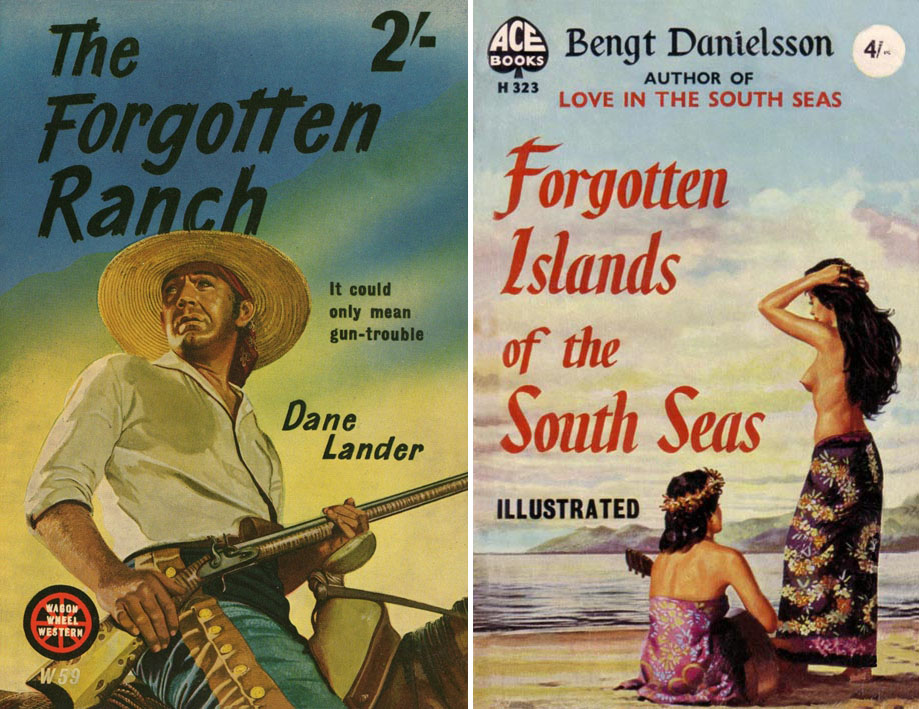
Random scans this week are a quartet of books with the word Forgotten in the title. Being obvious isn't always a bad thing...


Thursday, April 05, 2018

Commando issues 5111-5114

Brand new Commando issues are out today! See our Commandos brawling in desert dustups, targeting U-Boats with torpedo bombs in a Beaufort, excavating Roman treasures in Italian-occupied Abyssinia, and scrapping with spies off the coast of West Africa. It’s all in a day’s work for our heroes!

5111: A Tank Called Tempest
It may sound like the first line of a joke, but when an Australian, a Kiwi, a South African, and an English soldier were all stranded in a single tank in the North African desert, there was only one punchline the troops had in mind… Originally intended as a propaganda piece to showcase Commonwealth nations working together, the troublemaking quartet soon get separated from their lines, leaving them at each others’ – and Jerry’s throats.
    Jaume Forns’ steadfast attention to different nationals’ uniforms is put to the test in this George Low tale, which takes the Commando trope of bickering foes come friends and cranks it up to eleven.

Story: George Low
Art: Jaume Forns
Cover: Ian Kennedy

5112: Low-Level Ace
Pilot Officer Bob Tanner flew his Beaufort so low that sometimes his crew “thought they were in a submarine”! But his men always trusted him, even when the waves licked at the undercarriage of their aircraft. A man who didn’t trust Tanner, however, was Pilot Officer Paul Scott. Pranks between airmen were one thing, but when Tanner uncovered a Nazi spy in the area and a turncoat among his superiors, jealously soon took hold of Scott, turning rivalry to resentment…
    Joining the commemoration of the Royal Air Force’s 100 years of service, this Gold issue reprint focuses on the exploits of a Bristol Beaufort torpedo bomber. Low-Level Ace sees one of Commando’s most the dynamic pairings of writer and interior artist, CG Walker and CT Rigby, paying an excellent homage to the bravery and determination of those who serve in the RAF.

Story: CG Walker
Art: CT Rigby
Cover: Union Studio
Originally Commando No. 480 (June 1970).

5113: Danger in the Dark
Danger Doyle is back! This time, he and his reluctant secret agent partner, Ned Finch, are shipped off to Italian-occupied Abyssinia for some well-deserved “time-off”. But as with everything to do with British Intelligence Organisation Omega, Danger and Ned are not so shocked to realise that there was an ulterior motive to their little holiday break in war torn Africa, as our hapless duo face-off against fascism, and find some rather interesting artefacts along the way.
    In the second instalment of writer Stephen Walsh and artist Keith Page’s Danger series, the antics are upped even higher as Ulysses ‘Danger’ Doyle adds to his list of life-saving accolades, while Ned continues to roll his eyes and prays that one day he might just catch a break.

Story: Stephen Walsh
Art: Keith Page
Cover: Keith Page

5114: The Waiting Game
As RAF Pilot Officer Bob Barnes cruised the West African coast, he scanned the wave bands on his radio. He never expected to tune into a U-Boat’s frequency, but when he overhears a Morse Code message and plots the course, the bearings lead north-east of Cape Town —inland. Either the Jerries had started putting wheels on their submarines or something else was afoot, and Jimmy was about to find out just what that was…
    Another celebration of the centenary of the Royal Air Force, KP MacKenzie’s ‘The Waiting Game’, like ‘Low-Level Ace’, focuses on bombers targeting U-Boats, but this time from the perspective of a navigator in a Catalina. Jose Maria Jorge’s interior art is just as thrilling as the story, while Ian Kennedy’s exhilarating cover has the Catalina almost bouncing off the waves as it gives chase to the fleeing U-Boat!

Story: KP MacKenzie
Art: Jose Maria Jorge
Cover: Ian Kennedy
Originally Commando No. 2734 (February 1994).

BEAR ALLEY BOOKS

BEAR ALLEY BOOKS
Click on the above pic to visit our sister site Bear Alley Books