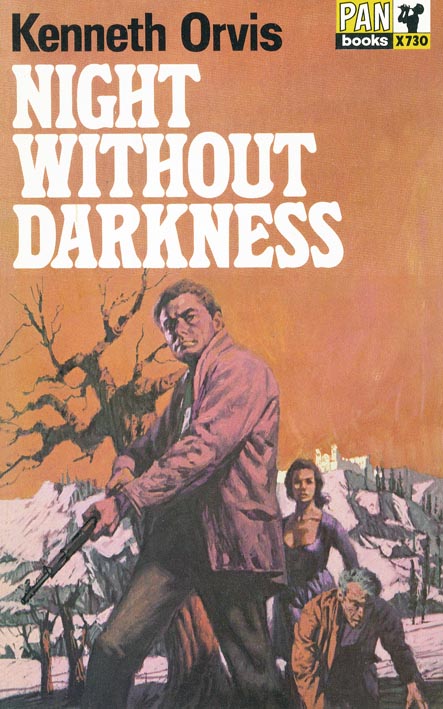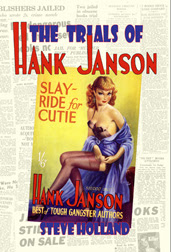
The following cover gallery covers Mazo de la Roche's Whiteoaks of Jalna series. The books are listed in narrative order rather than order of publication.
Building of Jalna (Little Brown, 1944)
Pan Books 375, (May) 1956. Cover by Bruce Windo
Pan Books X158, 1962. Cover by unknown
Pan Books 0330-10158-7, (Feb) 1971. Cover still. TV tie-in.
Morning at Jalna (Little Brown, 1960)
Pan Books X136, (Jul) 1962, 269pp, 3/6. Cover by Harry Sheldon
Pan Books 0330-10136-6, (Oct) 1969.
---- Xth imp., 1972. TV tie-in.
Mary Wakefield (Little Brown, 1949)
Pan Books 186, (Nov) 1951, 2/-. Cover by unknown
----, Xth imp., 1953, 2/-. as above
Pan Books X133, 1962.
----, Xth imp., 1965. Cover by Gordon King
Pan Books 0330-10133-1, (Feb) 1971. TV tie-in.
Young Renny (Little Brown, 1935)
Pan Books 65, (Oct) 1948, 256pp, 2/-. Cover by unknown
----, 2nd imp., 1951.
----, 3rd imp., 1953.
Pan Books G299, 4th imp., 1959.
Pan Books X140, 5th imp., 1962. Cover by Helweg
----, 6th imp., 1965.Cover by Gordon King
Whiteoak Heritage (Little Brown, 1940)
Pan Books 98, (Aug) 1949, 224pp, 2/-. Cover by Allan Pollack
----, 2nd imp., 1952. Cover by unknown
----, 3rd imp., 1955.
Pan Books X157, 4th imp., 1962, 255pp, 3/6. Cover by Harry Sheldon
----, 5th imp., 1963. as above
----, 6th imp., 1966, 255pp, 3/6.
The Whiteoak Brothers (Little Brown, 1953)
Pan Books 405, (Feb) 1957. Cover by Jack Keay
Pan Books X141, 2nd imp., 1962, 254pp, 3/6. Cover by Harry Sheldon
----, 3rd imp., 1963. as above
Pan Books M199, 1967.
Jalna (Little Brown, 1927)
Pan Books 196, (Feb) 1952. Cover by unknown
Pan Books X132, 1962. Cover by unknown
----, Xth imp., 1965. Cover by Gordon King
Pan Books 0330-10132-3, (Mar) 1969. Cover as above
----, Xth imp., TV tie-in.
Whiteoaks of Jalna (Little Brown, 1929; as Whiteoaks, Macmillan, 1929)
Pan Books X38, (May) 1959.
Pan Books M198, 1967. Cover by Hans Helweg
Finch's Fortune (Little Brown, 1932)
Pan Books X43, (Nov) 1959.
Pan Books M200, 1967. Cover by Hans Helweg
The Master of Jalna (Little Brown, 1933)
Pan Books 281, (Apr) 1954. Cover by unknown
Pan Books X125, 2nd imp., 1962.
----, 3rd imp., 1962.
----, 4th imp., 1965, 271pp, 3/6. Cover by Gordon King
Pan Books M262, 5th imp., 1968, 271pp, 5/-. as above
Pan Books 0330-20262-6, c.1969.
Whiteoak Harvest (Little Brown, 1936)
Pan Books GP87, (Nov) 1957. Cover by Sam Peffer
Pan Books X118, 1962.
----, Xth imp., c.1965, 3/6. Cover by ?
Pan Books 0330-10118-8, (Mar) 1969. Cover as above
Wakefield's Course (Little Brown, 1941)
Pan Books X50, (Feb) 1960, 330pp, 3/6. Cover by Sam Peffer
----, 2nd imp., 1961. Cover as above
Pan Books 0330-10050-5, c.1969.
Return to Jalna (Little Brown, 1946)
Pan Books X60, (Jun) 1960, 379pp, 3/6. Cover by unknown
----, 2nd imp., 1961. as above
----, 3rd imp., 1962. as above
Pan Books 0330-10060-2, (Jul) 1969.
Renny's Daughter (Little Brown, 1951)
Pan Books 353, (Aug) 1955. Cover by unknown
----, 2nd imp.
Pan Books X159, 3rd imp., 1962, 283pp, 3/6. Cover by Harry Sheldon
Pan Books M201, 1967.
Pan Books 0330-20201-4, c.1972. TV tie-in.
Variable Winds at Jalna (Little Brown, 1954)
Pan Books G154, (Aug) 1958. Cover by Sam Peffer
----, 2nd imp., 1959
----, 3rd imp., 1960
----, 4th imp., 1961.
Pan Books X195, 5th imp., 1963.
---- 6th imp., 1965, 251pp, 3/6.
Centenary at Jalna (Little Brown, 1958)
Pan Books X89, (Jun) 1961, 317pp, 3/6. Cover by Harry Sheldon
----, 2nd imp., 1961, 317pp, 3/6. as above
----, 3rd imp., 1962, 317pp, 3/6. as above
----, Xth imp., c.1965, 3/6. Cover by ?
Pan Books 0330-02069-2, c.1969.
Saturday, July 04, 2015
Friday, July 03, 2015
Comic Cuts - 3 July 2015
With the next issue of Hotel Business at the printers, I'm free, free, free! for a whole three days, which I've spent slaving over a hot scanner trying to get through more of the accumulated paperwork of thirty years freelancing, researching and just generally finding myself incapable of throwing anything away.
Even when I'm desperately trying to shed myself of as much of this junk as I can, I'm still finding it hard to part with scraps that could—at least in my mind—contain vital details for some future project or article. Chances are, the vast majority of these scans won't ever be opened again and I'm wasting a lot of glorious sunshine on things of little importance or use. But there's that nagging doubt at the back of my brain that says "What if you do need it... how will you feel knowing that you had the details you're chasing and threw them away for the sake of saving a minute at the scanner?"
Curse you, doubt! I would be gorgeously tanned by now.
I hope you all coped with the heat. Some readers—and I'm really thinking of you, Roger—would probably find the idea of sweltering temperatures in the low thirties laughable. We did manage to get as high as 36 degrees in London and the papers went into meltdown. Anyone would think we'd never had a hot day before. Mel's little thermometer measured the temperature in one room at 28, although that room was never in direct sunlight. I reckon my office probably hit 30.
The windows were all cracked open in the utility room outside my office door. If I opened the back door any wider than the width of a wasp, a wasp would be droning around my head within five minutes, accompanied by a couple of flies, various midges and a mosquito or three. I spent half of Wednesday chasing insects out of the room—I don't have a phobia of them, but I do find it impossible to work when they're noisily buzzing back and forth, back and forth, back and forth.
What follows then is some kind of idiot dance: a grown man waving a stiff-backed A4 envelope and shouting at a tiny insect that doesn't understand directions. "That way, you little——!" But instead of flying out the open back door, the beasts circle back into the depths of the office.
Insects aside, I'm enjoying the sunshine and looking forward to the tomatoes that the nice weather is likely to bring. We have three tomato plants this year, plus a couple of others, including a cucumber plant. They all need watering, so we could do with some rain, not just to break the humidity but also to fill our two water butts.
Today's random scans... you may notice a theme!
Even when I'm desperately trying to shed myself of as much of this junk as I can, I'm still finding it hard to part with scraps that could—at least in my mind—contain vital details for some future project or article. Chances are, the vast majority of these scans won't ever be opened again and I'm wasting a lot of glorious sunshine on things of little importance or use. But there's that nagging doubt at the back of my brain that says "What if you do need it... how will you feel knowing that you had the details you're chasing and threw them away for the sake of saving a minute at the scanner?"
Curse you, doubt! I would be gorgeously tanned by now.
I hope you all coped with the heat. Some readers—and I'm really thinking of you, Roger—would probably find the idea of sweltering temperatures in the low thirties laughable. We did manage to get as high as 36 degrees in London and the papers went into meltdown. Anyone would think we'd never had a hot day before. Mel's little thermometer measured the temperature in one room at 28, although that room was never in direct sunlight. I reckon my office probably hit 30.
The windows were all cracked open in the utility room outside my office door. If I opened the back door any wider than the width of a wasp, a wasp would be droning around my head within five minutes, accompanied by a couple of flies, various midges and a mosquito or three. I spent half of Wednesday chasing insects out of the room—I don't have a phobia of them, but I do find it impossible to work when they're noisily buzzing back and forth, back and forth, back and forth.
What follows then is some kind of idiot dance: a grown man waving a stiff-backed A4 envelope and shouting at a tiny insect that doesn't understand directions. "That way, you little——!" But instead of flying out the open back door, the beasts circle back into the depths of the office.
Insects aside, I'm enjoying the sunshine and looking forward to the tomatoes that the nice weather is likely to bring. We have three tomato plants this year, plus a couple of others, including a cucumber plant. They all need watering, so we could do with some rain, not just to break the humidity but also to fill our two water butts.
Today's random scans... you may notice a theme!
Labels:
Comics News
Thursday, July 02, 2015
Commando issues 4823-4826
Commando issues on sale 2nd July 2015.
Commando No 4823 – Waterloo!
The wars started with a peasant’s revolt in Paris and ended beside an obscure farmhouse in Belgium. Over nearly three decades, France, her armies and her new emperor turned Europe into a cauldron of conflict.
Henri Durant and Jean Tavere were just two of the thousands of men whose lives were turned upside down in these tumultuous years. In the end, only one of them would survive the battle of…
Waterloo!
Introduction
200 years ago, the battle that — arguably if you’re French — set the political landscape of Europe for many generations was fought in a previously insignificant area of what was then the Netherlands. Waterloo.
Described by the eventual victor, the Duke of Wellington, as "the nearest-run thing you ever saw in your life" it was a titanic struggle between the armies of half the nations of Europe. But what of the men, the ordinary Joes and Pierres who closed together in the heat and smoke of battle? We asked regular Commando writer Ferg Handley to weave some of his magic and give us a tale that showed a little of the life they might have lived. That he’s managed to put those lives in an authentic historical setting — not just an extended battle scene — is testament to his talents.
He came up with a pair of stories (Part Two is coming soon!) that Carlos Pino has illustrated with his customary panache. I really do think they’ve done us proud.—Calum Laird, Commando Editor
Story: Ferg Handley
Art: Carlos Pino
Cover: Carlos Pino
Commando No 4824 – The Desperate Hours
“Old Soldiers never die,” was just another saying to Corporal Bill Curtis and Private Jack Hunt until that night they landed on an island to sabotage the huge guns threatening the Allied invasion forces.
Then strange things began to happen. It all started when they met up with an officer of Napoleon’s Army — a man who by rights should have been dead for over a hundred years, but still helped them fight the Nazis.
Introduction
Waterloo is very much in the minds of military historians (and war comic fans) right now. In this batch of four Commandos, we’ve included a tale set very much around the battle which I hope you’ll enjoy. Checking out 50-year-old stories for the Gold Collection, I didn’t expect to come across anything remotely connected with the battle 200 years ago. Then this tale popped up.
It was a surprise as Ken Barr’s outrageous cover gives no clues to the Napoleonic connection. Skentleberry’s script, though, weaves the echo in very nicely, thanks.
So get reading and finally face our Waterloo.—Calum Laird, Commando Editor
Story: Skentleberry
Art: Sostres
Cover: Ken Barr
Originally Commando No 157 (March 1965), re-issued as No 763 (August 1973).
Commando No 4825 – Hi-Jack!
Lieutenant Pete Wade was very glad to see the last of Greece. He had seen too many brave men die facing hopeless odds as the Nazis swarmed in with overwhelming numbers.
But he wouldn’t have been nearly so pleased if he’d known that he’d be sent back to Greece…by parachute, at dead of night. And there would be other enemies to deal with, more dangerous even than the Nazis!
Introduction
When Commando fan Phil Singleton nominated this book for a fresh viewing, I don’t think he realised that he’d done me a huge favour. As a nipper, I remembered reading this particular story but had singularly failed to track it down despite many visits to the archive. I was on the third or fourth page when I realised I’d found it at last. Cheers, Phil.
We try (yes we do!) to avoid too much stereotyping of our characters these days but back in ’71 there were obviously no such reservations — check out Spiro if you don’t believe me! That said, this is a cracking tale of intrigue, filled with contrasting, clashing players. As usual, the art totally does justice to the script.
Now, if you’ll excuse me, the 11-year-old me is about to read the story again.—Calum Laird, Commando Editor
Story: R. A. Montague
Art: Collado
Cover: Penalva
Originally Commando No 605 (December 1971), re-issued as No 1692 (April 1983).
Commando No 4826 – Fit To Fight
Massive doors set in a cliff face. Enemy submarines slinking in at night to their hidden lair…and slinking out again before dawn to go about their deadly business.
This base could not be bombed or shelled, but it had to be destroyed. And the man to do it was a soldier sent home from the desert with wounds that had made him “unfit for duty”.
Introduction
This book is nicely paced. Just as we’re getting into an action-packed war desert tale, our hero, and with him the reader, unexpectedly find themselves thrust into an entirely different, but equally welcome kind of story — a sabotage mission involving killer U-boats, the French Resistance and the Gestapo.
It’s gripping stuff and Lieutenant Dick Morgan, the aforementioned hero, is a memorable Commando character. Side-lined on several occasions, he is absolutely determined to be involved in the action and do his duty.—Scott Montgomery, Deputy Editor
Story: R.A. Montague
Art: Elias
Cover: Ian Kennedy
Originally Commando No 1065 (September 1976), re-issued as No 2379 (June 1990).
Commando No 4823 – Waterloo!
The wars started with a peasant’s revolt in Paris and ended beside an obscure farmhouse in Belgium. Over nearly three decades, France, her armies and her new emperor turned Europe into a cauldron of conflict.
Henri Durant and Jean Tavere were just two of the thousands of men whose lives were turned upside down in these tumultuous years. In the end, only one of them would survive the battle of…
Waterloo!
Introduction
200 years ago, the battle that — arguably if you’re French — set the political landscape of Europe for many generations was fought in a previously insignificant area of what was then the Netherlands. Waterloo.
Described by the eventual victor, the Duke of Wellington, as "the nearest-run thing you ever saw in your life" it was a titanic struggle between the armies of half the nations of Europe. But what of the men, the ordinary Joes and Pierres who closed together in the heat and smoke of battle? We asked regular Commando writer Ferg Handley to weave some of his magic and give us a tale that showed a little of the life they might have lived. That he’s managed to put those lives in an authentic historical setting — not just an extended battle scene — is testament to his talents.
He came up with a pair of stories (Part Two is coming soon!) that Carlos Pino has illustrated with his customary panache. I really do think they’ve done us proud.—Calum Laird, Commando Editor
Story: Ferg Handley
Art: Carlos Pino
Cover: Carlos Pino
Commando No 4824 – The Desperate Hours
“Old Soldiers never die,” was just another saying to Corporal Bill Curtis and Private Jack Hunt until that night they landed on an island to sabotage the huge guns threatening the Allied invasion forces.
Then strange things began to happen. It all started when they met up with an officer of Napoleon’s Army — a man who by rights should have been dead for over a hundred years, but still helped them fight the Nazis.
Introduction
Waterloo is very much in the minds of military historians (and war comic fans) right now. In this batch of four Commandos, we’ve included a tale set very much around the battle which I hope you’ll enjoy. Checking out 50-year-old stories for the Gold Collection, I didn’t expect to come across anything remotely connected with the battle 200 years ago. Then this tale popped up.
It was a surprise as Ken Barr’s outrageous cover gives no clues to the Napoleonic connection. Skentleberry’s script, though, weaves the echo in very nicely, thanks.
So get reading and finally face our Waterloo.—Calum Laird, Commando Editor
Story: Skentleberry
Art: Sostres
Cover: Ken Barr
Originally Commando No 157 (March 1965), re-issued as No 763 (August 1973).
Commando No 4825 – Hi-Jack!
Lieutenant Pete Wade was very glad to see the last of Greece. He had seen too many brave men die facing hopeless odds as the Nazis swarmed in with overwhelming numbers.
But he wouldn’t have been nearly so pleased if he’d known that he’d be sent back to Greece…by parachute, at dead of night. And there would be other enemies to deal with, more dangerous even than the Nazis!
Introduction
When Commando fan Phil Singleton nominated this book for a fresh viewing, I don’t think he realised that he’d done me a huge favour. As a nipper, I remembered reading this particular story but had singularly failed to track it down despite many visits to the archive. I was on the third or fourth page when I realised I’d found it at last. Cheers, Phil.
We try (yes we do!) to avoid too much stereotyping of our characters these days but back in ’71 there were obviously no such reservations — check out Spiro if you don’t believe me! That said, this is a cracking tale of intrigue, filled with contrasting, clashing players. As usual, the art totally does justice to the script.
Now, if you’ll excuse me, the 11-year-old me is about to read the story again.—Calum Laird, Commando Editor
Story: R. A. Montague
Art: Collado
Cover: Penalva
Originally Commando No 605 (December 1971), re-issued as No 1692 (April 1983).
Commando No 4826 – Fit To Fight
Massive doors set in a cliff face. Enemy submarines slinking in at night to their hidden lair…and slinking out again before dawn to go about their deadly business.
This base could not be bombed or shelled, but it had to be destroyed. And the man to do it was a soldier sent home from the desert with wounds that had made him “unfit for duty”.
Introduction
This book is nicely paced. Just as we’re getting into an action-packed war desert tale, our hero, and with him the reader, unexpectedly find themselves thrust into an entirely different, but equally welcome kind of story — a sabotage mission involving killer U-boats, the French Resistance and the Gestapo.
It’s gripping stuff and Lieutenant Dick Morgan, the aforementioned hero, is a memorable Commando character. Side-lined on several occasions, he is absolutely determined to be involved in the action and do his duty.—Scott Montgomery, Deputy Editor
Story: R.A. Montague
Art: Elias
Cover: Ian Kennedy
Originally Commando No 1065 (September 1976), re-issued as No 2379 (June 1990).
Wednesday, July 01, 2015
Roger Longrigg
A couple of clippings from The Independent from 2000 covering the death of Roger Longrigg. He was the author of some 55 novels under a variety of pen-names, most notably Rosalind Erskine, under which name he penned the novel The Passion-Flower Hotel, which was turned into a long-running play in the 1960s and later filmed in Germany in the 1970s with Nastassja Kinski.
Subscribe to:
Posts (Atom)