

Sunday, March 16, 2014

Saturday, March 15, 2014

Friday, March 14, 2014
Comic Cuts - 14 March 2014

I have another request of readers: does anyone have a copy of the "Giant Spacefact Wallchart" that was given away with the first issue of Countdown. I need to get scan of it – with or without stamps, I don't mind – and hopefully someone will still have it. The condition is not important but I do need a print-quality scan. If you only have an A4 scanner, a couple of overlapping scans will also do . . . I can photoshop the image back together.
So... um... that's my news... what have you been up to? Well, I can't speak for you all, but Anton Haasnoot sent me a picture of a Charles Garvice novel all the way from the Netherlands. It reminded me that I started off the random scans as a way of forcing myself to clean up a few covers every week. Last Saturday, having picked up a couple of old paperbacks in charity shops and Mel being away at a convention for the weekend, I spent the whole afternoon cleaning up just one cover. I was amazed how relaxing it felt, even when I was tinkering around with some of the most horribly damaged bits for twenty or thirty minutes at a time.

Actually, this is the third Chris Foss-covered paperback I've found in two weeks, thanks to our local Oxfam having put out a few new SF titles, including Poul Anderson's Conquests, which you'll find below. These clean-up operations don't always work out. There are some where the colours have degraded so badly – usually on or towards the spine – that they're impossible to fix. To show you what I mean, I'll post a couple of books I have by Edmund Cooper. I had these years ago in almost mint condition but they were disposed of, along with a few hundred other paperbacks, in a moment of madness. The Cooper novels I've subsequently picked up clearly belonged to a heavy smoker, because the spines are all brown and horrible and trying to restore the artwork to how it should look is nigh on impossible. You can see that especially in the last pic where I've not yet touched the original scan. They all looked like this to start with!


Thursday, March 13, 2014
Commando Issues 4687-4690
Commando issues on sale 13th March 2014.
 Commando No 4687 – First Fight For Flanders
On the morning of the 28 June 1914 two pistol shots fired in a Sarajevo street would plunge the world into the most destructive war it had ever known as a spider’s web of alliances set Great Power against Great Power.
By the time Private Hugh MacPherson got to France, the first trenches were scarring the landscape, heralding the static, deadly warfare to come. But Hugh had another concern...his officer. The man he believed had blinded his brother.
A reckoning was coming.
Story: George Low
Art: Keith Page
Cover: Ian Kennedy
 Commando No 4688 – Zero Basher
Young Bill Daniel was a fine Hurricane pilot. He welcomed his posting to Burma and the chance to shoot it out with Jap Zeros high over the jungles. But it wasn’t to be as simple as that. Soon after he took off with Mike Bell, his squadron leader, Bill found out why 1066 squadron was known throughout the RAF as “Suicide Squadron”…
Introduction
Cool, calculating characters have found homes in Commando stories since the very earliest issues were published. Sometimes on the side of the angels, sometimes not. In this instance the cool, calculating Squadron Leader is definitely on the side of…no, find out for yourself! Read the book.
That’s once you’ve got beyond Ken Barr’s accomplished full colour cover, for there’s a lot to admire in Snr Ortiz’s black and white work. He didn’t do a great number of Commandos (we reckon 19), but he was in at the start with No 5 and finished with Feb 78’s No 1202 — a good run by anyone’s standards.
Calum Laird, Commando Editor
Story: Fitzsimmons
Art: Ortiz [in error, actually Gordon Livingstone]
Cover: Ken Barr
Zero Basher originally Commando No 136 (October 1964), re-issued as No 703 (December 1972)
 Commando No 4689 – Seaplane Strike
With only three working engines and weighed down by a rescued Allied submarine crew, the RAF Sunderland flying boat was stuck at sea level in the waterways of the Burmese chaungs. Hunted by a relentless Japanese officer, the aircraft’s crew had to find a way home — they had vital information of a massive Japanese force waiting for a break in the monsoon…waiting to obliterate the Allies.
Pilot “Lofty” Crane planned to show the Japs that they couldn’t keep good men — or a good plane — down.
Story: Alan Hebden
Art: Carlos Pino
Cover: Carlos Pino
 Commando No 4690 – The Invisible Warrior
When four Allied submarines were lost without trace in the same area of the Indian Ocean, the Top Brass believed it was the work of a new Japanese weapon, code-named Namurani.
The remaining sub crews knew different – the area was jinxed!
Lieutenant Dan Baxter, commanding the submarine HMS Bluefin, didn’t know what to believe until he learned the story of the legendary Japanese Samurai Warlord, Tichibu, and his Spirit bodyguard, Namurani –
THE INVISIBLE WARRIOR
Introduction
Argentinian artist Jose Maria Jorge was well-known for his stunning aeroplane illustrations – but we can see from this story that he was every bit as good at drawing nautical tales. Jorge’s first published Commando was ‘Flying Fury’ (No 384) in February 1969. He illustrated Commando books for over forty years – including the 4000th issue, "Aces All!", in April 2007 – right up to September 2010’s ‘Divided Aces’ (No 4329), published shortly before his death. A unique talent, much missed, but luckily we can still enjoy his extraordinary work.
Scott Montgomery, Deputy Editor
Story: R.A. Montague
Art: J.M. Jorge
Cover: Jeff Bevan
The Invisible Warrior, originally Commando No 2306 (August 1989), re-issued as No 3868 (December 2005)
On the morning of the 28 June 1914 two pistol shots fired in a Sarajevo street would plunge the world into the most destructive war it had ever known as a spider’s web of alliances set Great Power against Great Power.
By the time Private Hugh MacPherson got to France, the first trenches were scarring the landscape, heralding the static, deadly warfare to come. But Hugh had another concern...his officer. The man he believed had blinded his brother.
A reckoning was coming.
Story: George Low
Art: Keith Page
Cover: Ian Kennedy
Young Bill Daniel was a fine Hurricane pilot. He welcomed his posting to Burma and the chance to shoot it out with Jap Zeros high over the jungles. But it wasn’t to be as simple as that. Soon after he took off with Mike Bell, his squadron leader, Bill found out why 1066 squadron was known throughout the RAF as “Suicide Squadron”…
Introduction
Cool, calculating characters have found homes in Commando stories since the very earliest issues were published. Sometimes on the side of the angels, sometimes not. In this instance the cool, calculating Squadron Leader is definitely on the side of…no, find out for yourself! Read the book.
That’s once you’ve got beyond Ken Barr’s accomplished full colour cover, for there’s a lot to admire in Snr Ortiz’s black and white work. He didn’t do a great number of Commandos (we reckon 19), but he was in at the start with No 5 and finished with Feb 78’s No 1202 — a good run by anyone’s standards.
Calum Laird, Commando Editor
Story: Fitzsimmons
Art: Ortiz [in error, actually Gordon Livingstone]
Cover: Ken Barr
Zero Basher originally Commando No 136 (October 1964), re-issued as No 703 (December 1972)
With only three working engines and weighed down by a rescued Allied submarine crew, the RAF Sunderland flying boat was stuck at sea level in the waterways of the Burmese chaungs. Hunted by a relentless Japanese officer, the aircraft’s crew had to find a way home — they had vital information of a massive Japanese force waiting for a break in the monsoon…waiting to obliterate the Allies.
Pilot “Lofty” Crane planned to show the Japs that they couldn’t keep good men — or a good plane — down.
Story: Alan Hebden
Art: Carlos Pino
Cover: Carlos Pino
When four Allied submarines were lost without trace in the same area of the Indian Ocean, the Top Brass believed it was the work of a new Japanese weapon, code-named Namurani.
The remaining sub crews knew different – the area was jinxed!
Lieutenant Dan Baxter, commanding the submarine HMS Bluefin, didn’t know what to believe until he learned the story of the legendary Japanese Samurai Warlord, Tichibu, and his Spirit bodyguard, Namurani –
THE INVISIBLE WARRIOR
Introduction
Argentinian artist Jose Maria Jorge was well-known for his stunning aeroplane illustrations – but we can see from this story that he was every bit as good at drawing nautical tales. Jorge’s first published Commando was ‘Flying Fury’ (No 384) in February 1969. He illustrated Commando books for over forty years – including the 4000th issue, "Aces All!", in April 2007 – right up to September 2010’s ‘Divided Aces’ (No 4329), published shortly before his death. A unique talent, much missed, but luckily we can still enjoy his extraordinary work.
Scott Montgomery, Deputy Editor
Story: R.A. Montague
Art: J.M. Jorge
Cover: Jeff Bevan
The Invisible Warrior, originally Commando No 2306 (August 1989), re-issued as No 3868 (December 2005)

Wednesday, March 12, 2014

Tuesday, March 11, 2014

Monday, March 10, 2014

Sunday, March 09, 2014
Central African Pioneer part 1
Gerry Embleton provides the artwork for this feature strip from the pages of The Children's Newspaper. Originally published in 1960, this is the first time it has been aired for over 50 years.
 (* artwork © Look and Learn Ltd.)
Saturday, March 08, 2014
George Vickers
GETTING ONE’S VICKERS IN A TWIST
by
Robert J. Kirkpatrick
.jpg)
Even now, with the benefit of online genealogy records – births, marriages, deaths and census returns (at www.ancestry.co.uk) – it is difficult to untangle the Vickers family story. Vickers was a common name in the 19th century, and the family had a habit of using the same first names when naming their children. However, it has been possible to put together a picture of the family’s personal and professional lives.
This, then, is the story of the Vickers bookselling, publishing and printing dynasty.
In his full–length study The London Journal 1845–83: Periodicals, Production and Gender (Ashgate, 2004) Andrew King wrote “When the Journal began, [George] Vickers was mainly a small–time printer and bookseller, with an office and shop at 28 Holywell Street…..George Vickers himself died in 1846…..but ‘George Vickers’, the name and concern, were carried on by his widow Anne and their sons George and Henry.” Previous sources that claimed George Vickers senior died in 1846 include Louis James (Fiction for the Working Man, Oxford University Press, 1963), and Victor E. Neuburg (Popular Literature: A History and Guide, Woburn Press, 1977).
However, it is now known that George Vickers senior was never a publisher, and that he died in 1837. The firm of Vickers was established by his son, George, in or around 1837, although the circumstances surrounding its birth remain a mystery.
George Vickers senior was born on 1 November 1793 in Shoreditch, London, to Edward Vickers, an oil and colourman, and his wife Mary. He was baptised, as George Edward Vickers, in the parish church of St. Leonard’s, Shoreditch, on 15 December 1793. On 25 February 1815 he married Mary Ann Amelia Higgins, born in May 1794, the daughter of Andrew Higgins, a retired waterman, in the parish of St. Andrew’s, Holborn. They went on to have eight children. The first, George William, was baptised on 27 July 1817 in St. Andrew’s, Holborn, his father’s occupation being given as a Law Stationer, with an address in Fetter Lane, off Fleet Street. The second child, Sarah Emma, was baptised in the parish of St. Mary’s, Lambeth, on 16 May 1819, with her father described as an Attorney’s Clerk, living in Kennington, South London. The second son, Henry Joseph, was born in Kennington and baptised at St. Mary’s Lambeth on 31 March 1822, with his father shown as a Lawyer’s Clerk of Kennington Lane. A third son, Andrew Edward, was born on 1 July 1823 and baptised in the parish church of St. George the Martyr, Southwark, on 28 September 1823, with his father’s occupation now recorded as that of a Law Stationer, living in Long Lane, Southwark. Three further children – Mary Ann Amelia, born in 1827, Charles, born in 1833, and Elizabeth, born in 1834 – were all baptised on 22 February 1837 at the parish church of St. Philip, Clerkenwell. The family’s address was given as 9 Spring Street, Clerkenwell, with the father’s occupation that of a Porter.
There could be more than one reason for this change in George Edward Vickers’ occupation. William N. Johnson (see The Vickers Publishing Family of London) suggests that George may have suffered some affliction which meant he could no longer work as a stationer or a clerk; or, again as suggested by William Johnson, the Baptism Register was wrong as a result of carelessness or misreading – the entries were presumably transcribed from baptism certificates which might have given George’s occupation as “Printer”. Interestingly, the succeeding three entries in the Register, recording the baptisms of the children of James and Ann Leach, also give James’s occupation as that of a Porter.
George Edward died in 1837 and was buried on 12 November 1837 in the Holborn parish of St. Andrew’s. His address was given as Laystall Street, Holborn.

By the time of the 1861 census, George William Vickers had moved to 6 Arundel Street, Strand, where he was a bookseller employing 15 men. He had married Emily Ellen Gilbey (born around 1830) at St. Martin–in–the–Fields, Westminster, on 27 November 1859. They had had their first child, Emily Georgina, born just before the census, and were employing two servants. Henry Vickers had remained at 28 & 29 Holywell Street, described in the 1861 census as a bookseller and publisher.
The Vickers name first appears in print in 1837, as one of the principal retail outlets for a couple of early issues – The Two Figaros and The Middle Temple – of Webster’s Acting National Drama, a series of play scripts. Why, and how, George established his business is not known, nor whether he took over an established concern or started from scratch. In October 1839, an Albert Vickers is recorded as holding a printing licence, for one press, at 28 Holywell Street. Earlier that year, in June a licence had also been granted to Leukin Jones at the same address. although whether or not they were in partnership is not known. Jones had earlier been granted licences at 278 Strand (May 1838) and 55 Holywell Street (November 1838). (Source: Register of those owning or selling printing presses, Middlesex Sessions of the Peace, London Metropolitan Archives). What relation Albert was to George Vickers is not known – William Johnson suggests that this was actually Andrew, although in 1839 he would only have been 16. However, it is known that he was in the printing trade from an early age.
The Vickers name subsequently appeared as sellers of the London Despatch in 1839, the National in 1840, and the Musical World in 1842 (advertisements giving George’s address as 20 Holywell Street). In the meantime, G. Vickers had appeared as the publisher of the serial Mysteries of Old St. Paul’s: A Tale of the Plague, issued in weekly parts (it ran to 17 numbers) in 1841. In October 1844, shortly before a fire destroyed all his stock, George Vickers began the serialisation of The Mysteries of London, written by G.W.M. Reynolds, which ran for a year, followed by a second series which also ran for a year. In between the two series, Vickers also launched, as publisher, the London Journal, owned by George Stiff and edited by Reynolds, which began its run in March 1845 and which was to continue, under various owners, editors and publishers, until 1928.
George Vickers went on to publish several more penny–part serials, including Eugene Sue’s Matilda, or The Memoirs of a Young Woman (1844) and Martin the Foundling (1846); Alexandre Dumas’ The Three Musketeers (1846) and Edmund Kean, or The Genius and the Libertine (1847); G.W.M. Reynolds’ Master Timothy’s Bookcase (1846) and Faust: A Romance of the Secret Tribunals (1847); and William Harrison Ainsworth’s The Tower of London (1853). He also launched a number of weekly periodicals, such as the Weekly Times (1847 – initially owned by George Stiff), the Puppet Show (1848), Tales and Readings for the People (1849), the Weekly Tribune (1849), the People’s Medical Journal and Family Physician (1850), and the Welcome Guest (1861 – purchased from John Maxwell and re–launched).
Like many publishers of cheap periodicals at the time, George Vickers occasionally sailed close to the wind. In November 1847 the publisher Richard Bentley obtained an injunction against the London Journal restraining it from publishing articles that had previously appeared in Bentley’s Miscellany; and a year later Bentley again took the London Journal to court for publishing extracts from Edward Bulwer Lytton’s Harold, The Last of the Saxon Kings.

In 1879 Vickers entered into a partnership with John Maxwell, of 4 Shoe Lane, Fleet Street, and acted as the main agent for several of Maxwell’s publications. In 1867 he began publishing a series of Gustave Aimard’s Indian Tales, translated from the French by Percy B. St. John – this ran to 21 volumes.
George Vickers’ wife Emily died in April 1876, and was buried in Norwood Cemetery, Lambeth. In the 1881 census, George is still living at 6 Arundel Street, recorded as a newsvendor employing 39 men and 9 boys. His five children were still living with him, alongside two servants. George himself died on 9 July 1886 at Arundel Street, and was buried alongside his wife. Shortly before his death, he had decided to retire and leave the business to his two sons, William Edward and George Frederick. In an indenture dated 10 June 1886 he assigned the business to William, then aged 22, with the proviso that George, then aged 18, could, if he wished, enter into a partnership with William when he had reached the age of 21. However, this led to a dispute between the two sons and two of his daughters. In his will, dated 30 April 1867, George left his leasehold property in Arundel Street, plus all his personal effects, to his wife – who was also named, along with two others, as an executor. He also left financial legacies to his children. He instructed that his business, operating out of Angel Court, be sold, with the proceeds to be invested in order to benefit his family. In the event, his wife and one of the other executors died before he did, and he did not alter his will accordingly. In August 1886 probate was granted to his daughters Emily Georgina and Louisa Elizabeth, his estate being valued at £68,519 (just over £6 million in today’s terms). In January 1888 the two sisters went to court to obtain a ruling on whether or not the value of the business should be taken into account in determining the sums due to them under the terms of the will. The court found in their favour. (Weekly Reporter, Vol. XXXVL, 28 April 1888, pp 545–548).
William Vickers did continue the business, although in a rather desultory way, publishing only a handful of books and pamphlets. He married Louisa Julia Vickers in Wandsworth in 1888 (whether or not she was in any way related to William is not known). In 1891, they were living with William’s brother Charles, a clerk in the Bank of England, in Kingston. Ten years later, they were living at 30 Montpelier Crescent, Brighton, William being described as a newspaper agent. They had had seven children, two of whom had died. They were also employing four servants. By 1911, the family had moved back to London, living at 121 Ashley Gardens, Westminster, with William described as a wholesale newspaper agent. One of his sons, Lyle Douglas (born in 1891), was apprenticed to him.
William Edward died at Ashley Gardens on 8 February 1912, leaving an estate valued at £36,637 (£3 million in today’s terms).
In the meantime, George Frederick Vickers had married Lilian Leslie (born around 1867) in Wandsworth in 1889. The 1891 census found them on holiday in Devon, with George described as a newsagent. At some point after this, George gave up work, possibly because of ill health – he died at 31 Cromwell Road, Hove, on 23 April 1896, described as an ex–wholesale and export bookseller and newsagent. He left an estate valued at £2,678 with probate granted to his wife Lilian and his brother William.
Lyle Douglas Vickers left the business soon after. Angel Court was demolished in 1925, the company moving to Southwark, and various members of the family ran it until 1947, when George Leslie Vickers, George Frederick’s son, died. It was finally wound up in 1977. (For a more detailed summary of the company’s later history, see William N. Johnson).

In July 1859 Henry took over the Weekly Magazine and Journal of Entertaining Literature from Ward & Lock, although he could only sustain it for a year before it was incorporated into his brother’s London Journal. In September 1861 he launched the London Herald, edited by Percy B. St. John, and in 1867 he began the Halfpenny Punch. He also issued a handful of penny–part serials, including The Life and Adventures of Jack Sheppard (44 numbers, 1858), Little John and Will Scarlett, or The Outlaws of Sherwood Forest (40 numbers, 1860), and Dora the Duchess, or Lovers’ Trials: A Mystery of the Highway (38 numbers, 1861). In January 1863 he launched the Boys’ Journal – A Magazine of Literature, Science and Amusement, edited for most of its run (1863–1871) by Charles Perry Brown, who later established the Aldine Publishing Company. This was a high–quality monthly magazine aimed at a middle–class readership, and was based partly on the templates established by Samuel Beeton’s Boy’s Own Magazine (launched in 1855) and George Routledge’s Every Boy’s Magazine (launched in 1862).
By 1866 Henry had moved from Holywell Street to 317 Strand, the 1871 census shows him living there as a bookseller employing 8 men, along with his wife Louisa, his two sons George and Shirley (born 1866), a shop assistant and one servant. By 1881 he had moved to 12 Putney Hill, Putney, still a bookseller at 317 Strand, now employing 12 men. His sons Henry George, George Charles and Arthur Joseph (aged 23, 22 and 20 respectively) were all assisting him. In that same year he launched his Penny Library of Popular Authors, edited by Charles H. Ross. He died on 19 October 1884, leaving an estate valued at £25,182 (just over £2 million in today’s terms). In his will, dated 27 November 1883, he left £1,000, an annuity of £200 and all his personal effects to his wife; and his leasehold interest in the property at 12 Putney Hill to his son Henry George, with the proviso that his wife could continue living there. Henry was also given £2,000 and the freehold of another property, Oak Villa, Queens Road, Norbiton, Surrey. Two of his other sons, Arthur and Shirley, were named as trustees in his will, and they were given the freehold of 315 Strand, plus cash and shares. Shirley was also left the freehold of 316 Strand, and Arthur the freehold of 317 Strand., along with all the business assets and £1,000 by way of capital to carry on the business. (It is presumed that the fourth son, George, had died).
In 1889 the business joined the Hansard Union, a conglomerate of printers and publishers, which collapsed the following year, leaving shareholders with a loss of around £1 million. The premises at 317 Strand were sold to the publishers Simpkin, Marshall, Hamilton, Kent & Co., who immediately moved there from Catherine Street.
George Edward Vickers’ third son, Andrew Edward Vickers (born in 1823) became a printer and bookseller at 5 and later 37 Holywell Street, from where he also published a couple of penny bloods – The Thirteenth, or The Fatal Number (written by Pierce Egan) and The Mendicants of London – and two dramas – The Gipsy Farmer and Sunshine and Shade – all in 1849. (These, issued with the imprint “A. Vickers”, are sometimes erroneously attributed to Ann Vickers). He married Mary Ann Dashwood in Richmond, Yorkshire, in 1846, and they went on to have nine children. Five of them – George Edward, Frances, Eugenie, Louisa Catherine and Matilda Grace, born between 1847 and 1859 – were all baptised at St. Bride’s Church, Fleet Street, on 17 April 1859, immediately after which the family emigrated to South Africa, where Andrew set up in business as a printer. He died in 1873, with his sons George and Henry continuing his business.
George Edward Vickers’ youngest son, Charles Vickers, born in 1833, spent his life as a printer, although it is not known if he worked for the family or elsewhere. In 1851 he was an apprentice compositor living with William Austin, a printer, in New Hampton, Middlesex. He married Sarah Ann Quelch (born around 1838 in Reading, Berkshire) in 1857 – they went on to have three children: Charles George Herring, born in Brixton in 1858; Amelia, born in 1860; and Henry Andrew, born in 1861. At the time of the 1861 census, the family was living in Clerkenwell. Sarah died in 1870, and in the following year’s census the family was living at 6 Fountain Court, Westminster. Ten years later, Charles senior was living at 150 Walworth Road, Southwark, with Henry, described as a bookseller’s assistant. The date of Charles’ death is not known. In 1891 Henry was recorded living in Camberwell, working as a publisher’s assistant and married to Sarah, with two sons; in 1891 he working as a printer’s warehouseman, still living in Camberwell; and in 1891 he was still in the same occupation, living in Peckham. with his wife and three children (a fourth had died). Charles George Vickers shunned the family tradition and became a dressing case maker.
(* The illustration at the top of our column is John Wykeham Archer's painting of Holywell Street, dating from 1862; other illustrations are from The London Journal and two from Boys' Journal.)
Friday, March 07, 2014
Comic Cuts - 7 March 2014

But I still have to drag myself out of bed in the morning and psyche myself up for a day's work, same as everyone else. The difference is that I've got no guarantee that I'll have earned a penny by the end of the day, which can be a bit nerve wracking. Couple that with a family history of high blood pressure—I'm only exaggerating slightly when I say my mum rattles when you hug her thanks to the combinations of pills she's on—and I sometimes wonder if freelancing is really the job for me!
But enough of this medical malarkey... how's the book going, I hear you cry. We're up to 11,500 words on the introduction but took a nice little step forward when I heard from one of the early sub-editors who has promised to answer a few questions. Researching comics isn't only about reading strips eight hours a day... there are the hours of frustration trying to track down information on the creators of the strips. And the number of creators it took to put together some comics is amazing: the Boys' World index listed 265 people who contributed to the paper and its annuals. If you spend a couple of hours on every name... well, you can do the math.
Countdown had a smaller pool of talent from which it drew, but trying to find out something about some of the lesser-known names takes time... which explains why the word-count has only jumped by about 5,000 words these past two weeks. At least you can be assured that they're well-researched words.

And on the same-ish subject, does anyone have a copy of the Countdown font that I can have? [Update: ditto the above.]
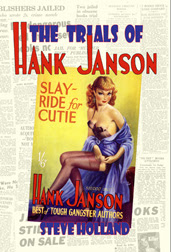
I've only managed to clean up a couple of covers for our random scans this week. Both are by the queen of gangster crime, Dail Ambler, who was the subject of one of my Kindle features, The Lady Holds a Gun! The Story of Dail Ambler, which covers her fascinating career from journalist to author to screenwriter.


Spitting Image The Giant Komic Book

* [Misc. Material] * (adverts) * ms
1 * [Misc. Material] * Contents * ms; illus. Pablo Bach
1 * [Comic Strip] * Robert Maxwell: There's Nothing He Can Do About This One * cs; art by David Stoten
2 * [Comic Strip] * Cecil * cs; art by David Stoten
2 * [Comic Strip] * Amazing! * ia; art by Colin Hadley
2 * [Comic Strip] * Mr Rentaquote! He'll say absolutely anything! * cs; art by Oscar Zarate
2 * [Misc. Material] * (Animated Stamp) * ms; art by Neville Astley
3 * [Comic Strip] * Restaurant Review with John Hurt * cs; art by Graham Humphries
4 * [Comic Strip] * Talkative Taffy Kinnock - The Welshman Who Talks A Lot! * cs; art by David Stoten
4 * [Comic Strip] * Make Yourself Look Like the Famous: Ronald Reagan * cs; art by David Haldane
4 * [Comic Strip] * Dr Owen He's All Alowen * cs; art by Tim Watts
5 * [Comic Strip] * 'Killer' Killer of the Seas * cs; art by Johnny Johnstone
6 * [Misc. Material] * Mifter Gillray'f Deadlieft Sinf: Avarice * il; illus. Gerald Scarfe
6 * [Comic Strip] * Once Upon a Time... * cs; art by Paul Stone
6 * [Comic Strip] * The Annabel Croft Tennis Coach Course * cs; art by Steve Dillon
6 * [Misc. Material] * On the Couch * ct; illus. Paul Cemmick
7 * [Comic Strip] * Two Gun Ron's Cowboy Code * cs; art by Paul Cemmick
8 * [Comic Strip] * Ray of the Receivers * cs; art by Steve Dillon
11 * [Photo Comic Strip] * The Lover * cs; illus. photos
12 * [Comic Strip] * Moggy! * cs; art by Mark Draisey
12 * [Comic Strip] * Dr Owen He's All Alowen * cs; art by Tim Watts
12 * [Comic Strip] * Kurt Waldheim - He's Lost His Memory * cs; art by Pablo Bach
13 * [Comic Strip] * Geoffrey Howe's Wet Dream * cs; art by Rowen Clifford
14 * [Misc. Material] * Inside Sellafield: An Exploded View * il; illus. John Lawson & Geoff Sims
16 * [Comic Strip] * Professor Braindrain The Mad Inventor * cs; art by Ionicus
17 * [Comic Strip] * Merchandisors: Battle for the Pocket Money * cs; art by Lee Sullivan
22 * [Comic Strip] * Once Upon a Time... * cs; art by Mark Draisey
22 * [Misc. Material] * On the Couch * ct; illus. Paul Cemmick
22 * [Comic Strip] * Dr Owen He's All Alowen * cs; art by Tim Watts
23 * [Comic Strip] * Little Ridley The Problem Kidley * cs; art by Graham Thompson
24 * [Comic Strip] * The Crazy Psychedelic World of Frank Bough * cs; art by Neville Smith
24 * [Comic Strip] * Make Yourself Look Like the Famous: Bob Monkhouse * cs; art by David Haldane
24 * [Comic Strip] * How to Make Your Garden Beautiful * cs; art by Steve Dillon
25 * [Comic Strip] * The Sheens * cs; art by Pablo Bach
26 * [Comic Strip] * Great Bible Tories: The Moneylenders and the Temple * cs; art by Steve Bendelack
27 * [Comic Strip] * The Druggies * cs; art by Harry North
27 * [Comic Strip] * How to Play Bowls * cs; art by Steve Dillon
27 * [Misc. Material] * On the Couch * ct; illus. Paul Cemmick
27 * [Comic Strip] * Once Upon a Time... * cs; art by Mark Draisey
28 * [Misc. Material] * The Ian Botham Inflight Safety Manual * ia
28 * [Misc. Material] * Wonders of the World No.9: Robert Robinson's Hair * ia; illus. Pablo Bach
29 * [Comic Strip] * Network Seven * cs; art by Pablo Bach
30 * [Comic Strip] * Terry's Toupee - When Wogan's Wig Gets Ahead He Comes Unstuck! * cs; art by Ian Jackson
32 * [Comic Strip] * A Week in Politics: December 2019 AD * cs; art by Brett Ewins
33 * [Comic Strip] * Doctor Finley's Chequebook * cs; art by Phil Gascoine
34 * [Comic Strip] * The Adventures of God - The Ultimate Super-hero * cs; art by Steve Dillon
36 * [Comic Strip] * The Weather Men - They Haven't a Clue! * cs; art by Pablo Bach
37 * [Misc. Material] * Construct Your Own Cher * ms; illus. Pablo Bach
38 * [Comic Strip] * No-Head Robson * cs; art by David Stoten
40 * [Comic Strip] * Jacko - He's Wacko! * cs; art by Oscar Zarate
41 * [Comic Strip] * (Talking Bollocks) * cs; art by Charles Peattie
41 * [Comic Strip] * The England Cricket Team - They're Completely Innocent! * cs; art by Arthur Robins
41 * [Comic Strip] * (Sheep) * cs; art by Arthur Robins
41 * [Misc. Material] * Amazing * ia; art by Colin Hadley
42 * [Misc. Material] * How Royal Are You? * qz; illus. Pablo Bach
42 * [Comic Strip] * Battle Picture Library: Codename Conquest! * cs; art by Tony McSweeney
44 * [Comic Strip] * In the Bowels of Fortress Wapping * cs; art by David Stoten
46 * [Misc. Material] * Construct Your Own Sitcom * ms; illus. Pablo Bach
48 * [Misc. Material] * 8 Amazing Political Facts * ia; illus. Tim Watts
50 * Anon. * Short Story * ss; illus. Janet Woolley
51 * [Comic Strip] * The Fat Chats * cs; art by Paul Cemmick
52 * [Comic Strip] * Deathwish: The Last Sequel * cs; art by Graham Humphries
53 * [Comic Strip] * The Further Adventures of Talkative Taffy - The Welshman with the Galloping Gob! * cs; art by David Stoten
54 * [Misc. Material] * Mrs Thatcher's Heaven * il; illus. Steve Bell; scr. by Dave Austin
56 * [Comic Strip] * Dr Owen He's All Alowen * cs; art by Tim Watts
56 * [Comic Strip] * Make Yourself Look Like the Famous: Andrew Lloyd Webber * cs; art by David Haldane
56 * [Comic Strip] * Johnny Onejoke * cs; art by David Stoten
57 * Anon. * How to be the Queen * ar
58 * [Comic Strip] * Judge Deaf * cs; art by Brett Ewins
60 * [Misc. Material] * The Chunnel: Wonder of the World * ia; illus. John Lawson & Geoff Sims
62 * [Comic Strip] * The Art of Sumo Wrestling * cs; art by Steve Dillon
62 * [Misc. Material] * Mifter Gillray'f Deadlieft Sinf: Pride or Vanity * il; illus. Gerald Scarfe
63 * [Comic Strip] * Oliver Reed in Tales of the Unexpected * cs; art by David Haldane
64 * [Comic Strip] * Fat & Useless * cs; art by Pablo Bach
65 * [Comic Strip] * Tumtum and the Forged Expenses * cs; art by Rian Hughes
68 * [Comic Strip] * Professor Pessary's Science Corner * cs; art by Simon Cooper
68 * [Comic Strip] * The Runcies * cs; art by David Stoten
68 * [Misc. Material] * Pomposity on Two * ct; illus. David Stoten
69 * [Misc. Material] * The Grovelage Royale * ia; illus. Paul Slater
70 * [Comic Strip] * Smashits * cs; art by Banx
72 * [Misc. Material] * Mifter Gillray'f Deadlieft Sinf: Wrath * il; illus. Gerald Scarfe
72 * [Comic Strip] * Even More Adventures of Talkative Taffy - The Welshman with the Big Mouth! * cs; art by David Stoten
73 * [Comic Strip] * Stranger Than Fiction * cs; art by Tony Joswick
76 * [Misc. Material] * Amazing * ia; art by Colin Hadley
76 * [Comic Strip] * Dr Owen He's All Alowen * cs; art by Tim Watts
76 * [Comic Strip] * Wimbledon: The Complete Coaching Course * cs; art by Steve Dillon
77 * [Comic Strip] * Geoffrey Howe's Bad Dream * cs; art by Hunt Emerson
78 * [Misc. Material] * Mifter Gillray'f Deadlieft Sinf: Sloth * il; illus. Gerald Scarfe
78 * [Comic Strip] * Make Yourself Look Like the Famous: Leon Brittan * cs; art by David Haldane
78 * [Comic Strip] * Once Upon a Time... * cs; art by Paul Stone
79 * [Comic Strip] * Noel Edmonds Speaking... * cs; art by Paul Cemmick
80 * [Comic Strip] * Voices in my Ear, Punters in my Lap, Dosh in my Pocket * cs; art by Charles Griffin
82 * [Photo Comic Strip] * You Don't Have To Say You Love Me * cs; illus. photos
83 * [Comic Strip] * The Impossible Journey - A Jeffrey Archer Adventure * cs; art by Harry North
87 * [Misc. Material] * The Art of Horsedrawn Carriage Eventing * ia; illus. Paul Semple
88 * [Comic Strip] * Beirut Force * cs; art by Brett Ewins
89 * [Comic Strip] * They Came from Outer Space * cs; art by Banx
90 * [Comic Strip] * Not Much Cop: Norris Dimbleby - Lawman of Tomorrow * cs; art by John Higgins
92 * [Comic Strip] * Glasnost Belongs To Me * cs; art by John Watson
93 * [Comic Strip] * Stories from the Movies: Rocky-18 * cs; art by Graham Humphries
94 * [Comic Strip] * Dr Owen He's All Alowen * cs; art by Tim Watts
94 * [Misc. Material] * Frank Bruno Jigsaw * il; illus. Graham Humphries
94 * [Misc. Material] * On the Couch * ct; illus. Paul Cemmick
94 * [Misc. Material] * Kissogram for Mr Jesus * ct; illus. Arthur Robins
95 * [Comic Strip] * Major Fergie The Right Royal *@X!?! * cs; art by Paul Sample
* [Misc. Material] * Face Masks * ms; illus. David Hughes

Thursday, March 06, 2014
Spitting Image page 4: various
Our last selection of artwork from Spitting Image: The Giant Komic Book, starting with some pages from Brett Ewins and finishing off with a little Herge tribute by Rian Hughes.


Subscribe to:
Posts (Atom)
BEAR ALLEY BOOKS

Click on the above pic to visit our sister site Bear Alley Books